
Submission
Deadline
October 16, 2026
Judging
Date
November 11, 2026
Winners
Announcement
November 26, 2026

For Junjie Huang, Founder, Sommelier, and Wine Buyer of Lajiaoyou Vitality, an independent restaurant in Guiyang, China, a good wine in a glass is only the starting point.
Every bottle he considers has to answer practical questions: Does it work with the food? Will guests accept the price? Can the restaurant make a sustainable margin? Can the importer maintain supply? And, perhaps most importantly, will the guest want to order it again?
Junjie has been independently buying wine for eight years, building on an understanding of wine developed alongside his family long before he began creating lists of his own. He holds the CAFA Certified Sommelier Level 2, Wine Lecturer Level 1, and World Brandy Sommelier certifications.
At Lajiaoyou Vitality, his approximately 60-label wine list spans eight countries, but its identity is distinctly local. The list is designed around the spicy, fermented, and complex flavours of Guizhou cuisine, with Junjie and his team personally testing pairings before wines are selected.
Sometimes those experiments leave the restaurant entirely. Riesling with Guiyang grilled tofu and sparkling wine with sour-spicy street food are examples of how Junjie believes wine can become part of everyday Chinese dining rather than remaining confined to conventional fine-dining occasions.
He also serves as a regional judge for the GANLAN 100 restaurant awards, adding a broader restaurant and hospitality perspective to his work.
As a judge at the Asia Wine Ratings, Junjie brings an important China-market perspective to the judging panel: that of a working restaurant owner, sommelier and buyer who personally decides what earns a place on the wine list and sees first-hand what Chinese consumers reorder.
We spoke with Junjie about what makes him consider a new wine, the mistakes international producers make when approaching China, restaurant pricing and margins, opportunities beyond China’s largest cities, regional consumer differences, and what ultimately makes a wine commercially relevant for the Chinese on-trade.
Three gates, in order — and every wine has to pass all three before it goes on my list.
First, does it work with our food? I cook creative Guizhou cuisine, so nothing gets listed until I've tasted it with my kitchen team.
Second, will my guests happily pay this price — and will they come back for it again and again? I want wines that become long-term favorites on the list, not one-time tries.
Third, can the supply side deliver consistently? That means both the importer's reliability and the estate itself — where the grapes are grown, and whether the wine's quality holds up vintage after vintage.
If a wine fails any of these gates, it doesn't make the list — no matter how famous the label.
But it works the other way too: if a wine instantly makes me picture the exact dish it belongs with, I will always stop and give it a serious tasting.
Tasting good is only the entry ticket. Beyond the glass, three things matter most.
First, value — will the guest come back and order it a second time?
Second, consistency of supply — I never want a wine my guests have just fallen in love with to be out of stock the following month.
And third, the one-sentence story — can my sommelier team sum up the wine's charm in a single sentence and tell the guest how it will pair with our dishes to create a little moment of delight on the palate?
Three common mistakes.
First, they talk terroir and scores, but never food. The first question a Chinese buyer asks is always, "What dish does it go with?"
Second, they don't understand China's pricing structure. After landing costs and layers of markup, a wine often reaches the restaurant with no competitiveness left.
Third, they only see Shanghai and Shenzhen. China's next growth in wine is in second-tier cities like mine — cities with deep local food cultures of their own, where guests are genuinely willing to pay for culture and well-crafted products. Yet very few producers ever come to listen to us.
Critically important. A restaurant is not a showroom — it's a business. Before I list a wine, I have to know: can my guests accept the price, does the margin cover my costs, and will it move?
Let me add one more thing: I especially love sourcing wines that can't be bought online. So many of our guests tell us, "Your wines are wonderful, but I can't find them anywhere online — I can only drink them here." And very often they take the empty bottles home, just because they love how the bottle looks. This happens all the time, and honestly, it makes me really happy.
The one thing producers should understand: an on-trade buyer doesn't want the cheapest wine — we want the price band where the guest feels value, and the restaurant still makes money.
Absolutely. The very reason I opened a Guizhou restaurant is this: Guizhou cuisine is built on fermentation and chilli, and wine is a fermented product too. When the two meet, it's a match made in heaven — the dish opens a second life.
My team and I test pairings every day, and I even take wines out to street stalls: Riesling with Guiyang grilled tofu, sparkling wine with sour-spicy cold starters. Our guests are surprised every single time.
Wine should not belong only to fine dining. It belongs at every table — it should be something people can enjoy naturally, every day. And that is exactly the perspective I most want to bring to a judging panel.
Guangzhou guests mostly buy for brands and business occasions. Guests in Guiyang are younger and more curious — they'll try natural wines, orange wines, even their own local fermented brews — but they're more price-sensitive, and "is it worth it?" decides everything.
What the two cities share: guests know more about wine every year, and they're less and less willing to pay for a famous name alone. That's why wine culture needs a group of us — restaurateurs, sommeliers, buyers — to keep nurturing it patiently, so more people can discover wine, get to know it, and finally fall in love with it.
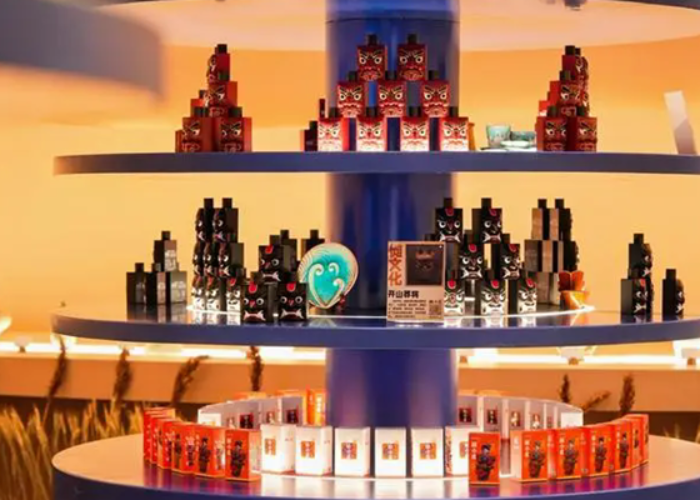
More important than many winemakers think. The label is the guest's first look — on the shelf and on the list. In a restaurant, a beautiful bottle sells itself.
In fact, many of our guests ask to take the bottle home with them — the best walking advertisement a wine can have.
The brand proposition matters even more. When a wine can speak for itself — "this is who I am, this is why I exist" — that's when a wine feels truly alive to me.

A by-the-glass wine must pass three tests: an approachable price, so guests dare to try; stability for two or three days after opening, because waste kills margin; and a friendly style that doesn't need a long explanation.
Funny enough — as I'm writing this answer, a guest at the next table just told us: "Your wine program is amazing, and there's so much choice — by the glass, mini tasting flights, bottles to take away, and everything pairs with the food so well. I'm bringing my friends next time." Moments like this say it all.
For producers, by-the-glass is the best tasting advertisement there is — a guest who falls in love with a glass orders the bottle next time. If you want a placement, first give me a reason to let guests try you with zero risk.
Technically excellent wines are everywhere; wines that actually sell are rare.
In Asia, the number of people who truly know wine is still relatively small — most guests need someone who knows wine to guide them, to give them a gentle nudge, before they can slowly feel what a wine is trying to express. And that is exactly what we, as sommeliers and buyers, are here for.
Commercial relevance means four things: it pairs with local food, it has a story, its price band lets the restaurant make margin, and supply keeps up with reorders.
For an unknown producer, awards are the fastest shortcut to trust. But what matters is who judged.
For those of us who actually buy wine every week, competitions judged by on-trade buyers — like the CWC — carry a very different weight: that's not just a sticker on a bottle; it's my peers having tasted the wine for me first.
When I see a medal from a buyer-judged competition, I'm willing to give that wine a tasting — and every partnership starts with exactly that one tasting.
Junjie’s perspective brings the realities of restaurant wine buying into sharp focus: quality may earn a wine consideration, but it does not automatically earn it a place on the list.
For an on-trade buyer, every bottle occupies commercially valuable space. The wine needs to work with the restaurant's food, sit within a price band guests are comfortable paying, generate sustainable margin and remain reliably available once consumers begin ordering it.
His approach also challenges the assumption that wine opportunity in China is concentrated primarily in major markets such as Shanghai and Shenzhen.
Cities such as Guiyang bring their own food cultures, consumer behaviours and commercial opportunities. For international producers, understanding those regional differences can be just as important as understanding China at a national level.
Perhaps most interesting is Junjie’s approach to wine and everyday Chinese food.
Pairing Riesling with Guiyang grilled tofu or sparkling wine with sour-spicy starters takes wine away from the conventional fine-dining framework and puts it into local drinking and dining occasions. For producers trying to build sustainable demand, those occasions can potentially matter far more than simply positioning a bottle as prestigious.
His buying philosophy can ultimately be reduced to a very practical question: will this wine work at the table, at this price, for this guest — and will they want it again?
Junjie’s perspective highlights something international wineries can easily overlook when considering China: there is no single “Chinese wine consumer.”
That creates a different question for a winery entering China.
Instead of simply asking, “Will Chinese consumers like my wine?”, producers may need to ask: Which consumer? In which city? At what price? With what food? And in what drinking occasion?
The answers can determine whether a wine simply enters China or actually builds demand there.
Understanding the relationship between wine quality and market relevance is central to the Asia Wine Ratings.
The competition evaluates wines through Quality, Value and Packaging, helping identify products that not only perform strongly in the glass but also have the attributes needed to connect with buyers and consumers in Asian markets.
For international wineries looking specifically at China, judges such as Junjie Huang provide a particularly relevant perspective.
He evaluates wine not only as a sommelier, but as someone who has to make real buying decisions for a Chinese restaurant.
That means considering questions producers will eventually encounter in the market: Does the wine justify its price? Can the restaurant make an appropriate margin? Does it work with local food? Is its story easy for a sommelier to communicate? Does the packaging attract attention? Can supply support repeat orders? And, ultimately, will the consumer order another glass or bottle?
His experience also demonstrates why Value can be especially important in China. The cheapest wine is not necessarily the most attractive proposition for an on-trade buyer. What matters is finding the price point where the consumer perceives value while the restaurant can still operate profitably.
Packaging has a similarly practical role. Junjie regularly sees guests wanting to take attractive empty bottles home, a small example of how design can continue communicating a wine's identity beyond the restaurant table.
And then there is Quality: the essential foundation without which the rest of the proposition cannot work.
Together, these factors help explain why a wine that is technically excellent may still struggle commercially and why another wine can become a long-term fixture on a restaurant list.
For unfamiliar international producers, competition recognition can also help overcome one of the first barriers to entering a new market: trust.
As Junjie explains, who sits behind the judging matters. When a medal comes from a competition evaluated by professionals who understand buying and selling wine, it can give another buyer a reason to consider a producer they have never encountered before.
A medal at the Asia Wine Ratings can therefore give wineries an additional credential when approaching importers, distributors, sommeliers, restaurants, retailers and other trade buyers in China and across Asia.
It does not replace the need for the right importer, pricing, distribution or market strategy.
But it can help create something every unfamiliar winery needs when approaching a new buyer: a reason to open the bottle and taste.
And, as Junjie puts it, every partnership can begin with exactly that one tasting.
This interview was conducted by Ankita Okate, Chief Growth Officer & Head of Events at Asia Wine Ratings, as part of an ongoing interview series featuring leading wine buyers, sommeliers, importers, distributors, restaurateurs, and beverage professionals shaping wine markets across China and Asia.
Also Read:
Inside Asia’s Evolving Wine Culture With Roberto Duran MS
Kevin Suen on Hong Kong's Wine Market and Winning Across Asia
How India’s First Master Sommelier Is Redefining Wine Conversations, Across Asia
Get your wines evaluated by leading Asian importers, distributors, retailers and trade buyers. Receive detailed feedback on quality, value and packaging and discover how your brand can improve its market potential in Asia.