
Submission
Deadline
October 16, 2026
Judging
Date
November 11, 2026
Winners
Announcement
November 26, 2026
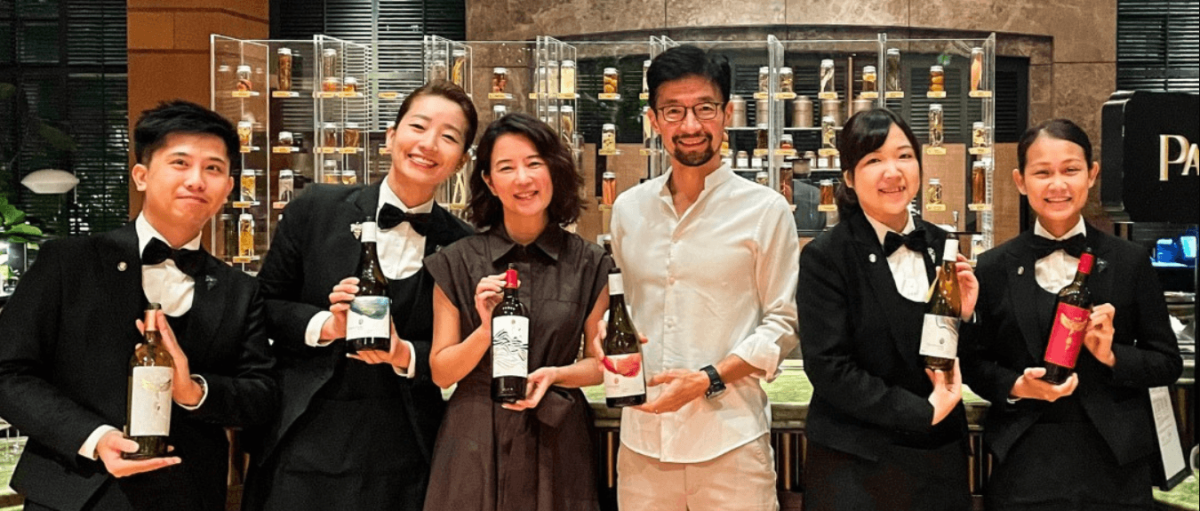
For much of the past two decades, the conversation around Chinese wine has centred on potential.
Could China produce wines capable of standing alongside the world's established regions? Could its vineyards express a genuine sense of place? Could its producers build identities rooted in terroir rather than novelty?
Located in the Qiu Shan Valley of Penglai, Shandong Province, the boutique estate has quietly become one of the region's most ambitious producers. Rather than pursuing scale, the winery has concentrated on understanding its vineyards, refining its viticulture, and allowing one of China's most promising wine regions to speak through the glass.
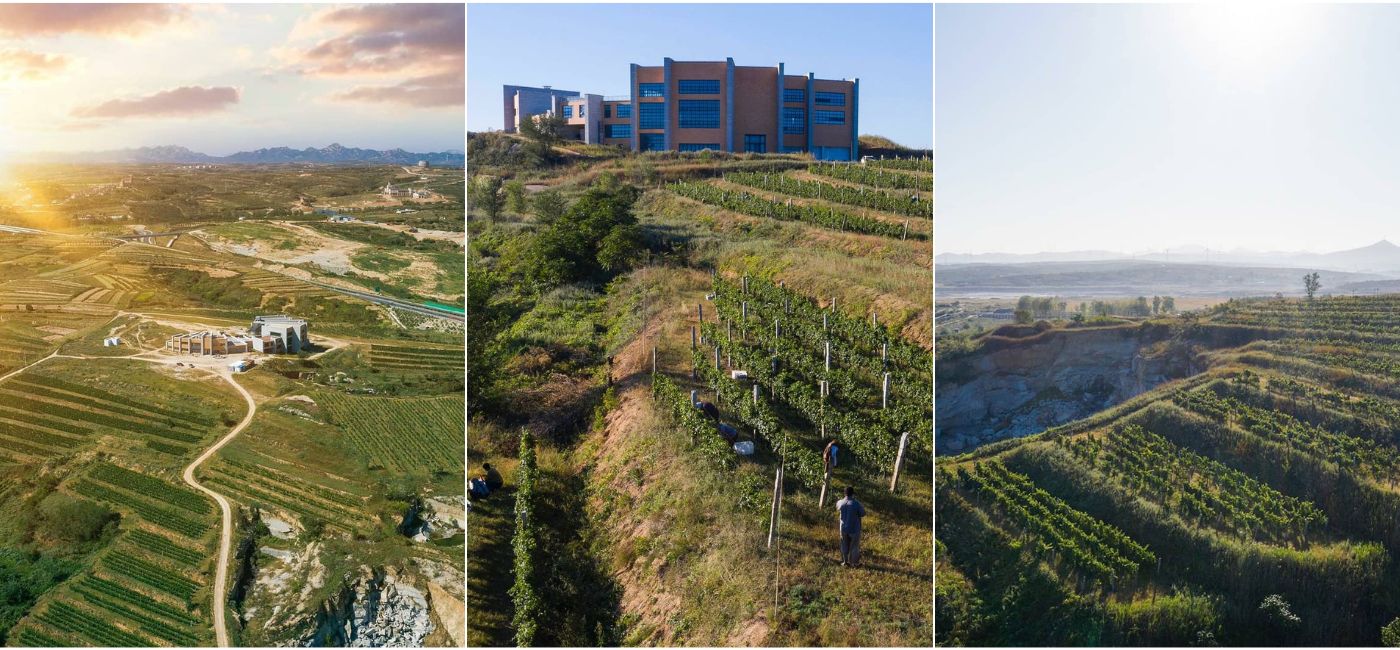
Image: Qiu Shan Valley and Mystic Island Winery. Source: Mystic Winery.
The story began in 2008, when the founders planted five classic Bordeaux grape varieties in the Qiu Shan Valley. More than a decade later, after years spent establishing the vineyards and allowing the vines to mature, the winery released its inaugural wines in 2019: Yihu Red Wine 2018 and Yihu Chardonnay 2018. The deliberate pace reflected a belief that quality begins in the vineyard and cannot be hurried.
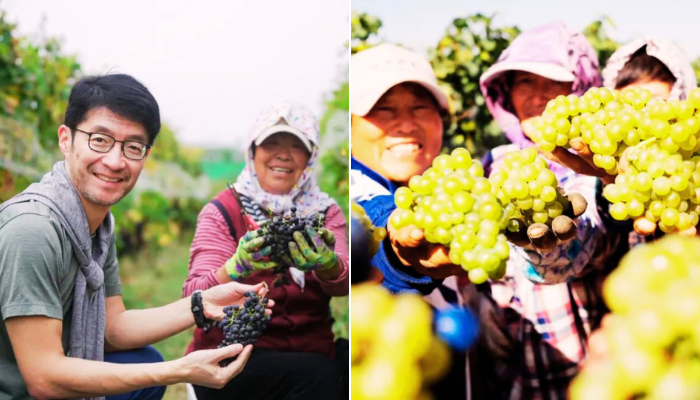
Image: Founder KC Kung with red grapes and people with white grapes at Mystic Island Vineyard.
Often described as one of China's most promising fine wine regions, the valley benefits from a maritime climate moderated by the nearby Bohai Sea, with seasonal variation that supports balanced ripening. The soils and topography create distinct vineyard parcels, allowing Mystic's viticulture team to work with individual blocks rather than treating the estate as a single site. According to the winery, these soils produce fruit with both richness and complexity, forming the foundation of its premium wines.
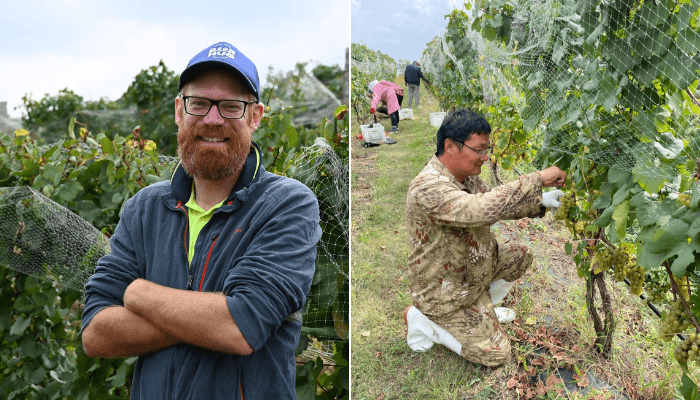
Image: Mystic's viticulture experts: (L-R) James Bowskill and Shawn Yu.
Rather than pursuing heavily manipulated wines, Mystic describes its work as a collaboration between skilled viticulture and the natural character of the Qiu Shan Valley. The objective is to preserve freshness, structure, and site expression while producing wines capable of ageing and competing on the international stage. That emphasis has helped position the estate among a growing generation of Chinese wineries focused on quality before quantity.
Mystic Island Winery has placed environmental, social, and governance (ESG) principles at the centre of its long-term strategy. The winery describes sustainability not as an isolated initiative but as an operating philosophy that influences vineyard management, environmental stewardship, community engagement, and the visitor experience. Its approach reflects an understanding that fine wine today is increasingly judged not only by what is in the bottle but also by how responsibly it is produced.
Visitors are encouraged to experience the Qiu Shan Valley beyond the tasting room, with the winery offering hospitality experiences that connect guests to the surrounding landscape and culture. By combining wine tourism with regional storytelling, Mystic aims to showcase not only its own wines but also the broader identity of one of China's emerging wine regions.
Since releasing its inaugural vintage, Mystic Island Winery has demonstrated that wines from the Qiu Shan Valley could compete successfully against established producers from traditional wine regions, reinforcing confidence in both the winery and the wider potential of Chinese fine wine.
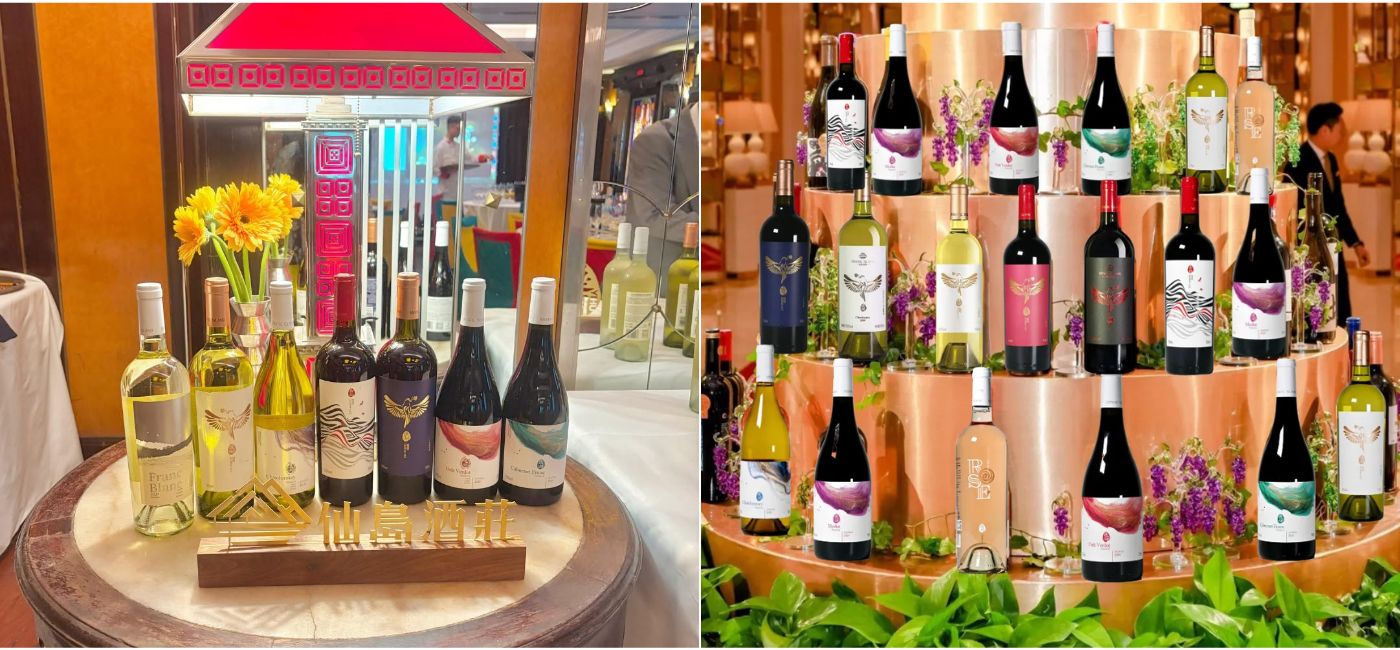
Image: From Yihu Chardonnay to reserve reds, each wine reflects the coastal terroir of the Penglai Peninsula and the commitment to precision winemaking. Source: Mystic Winery.
China's fine wine industry is still relatively young compared with the classic regions of Europe, but producers such as Mystic are helping redefine international perceptions. Their focus has shifted from proving that China can make wine to demonstrating that it can produce wines with authenticity, regional identity, and consistency.
Investment in viticulture, improved understanding of site selection, and increasing technical expertise have enabled producers to focus less on imitation and more on expressing the distinctive characteristics of their own vineyards. Mystic Island Winery exemplifies that transition, combining international winemaking knowledge with a deep commitment to the Qiu Shan Valley.
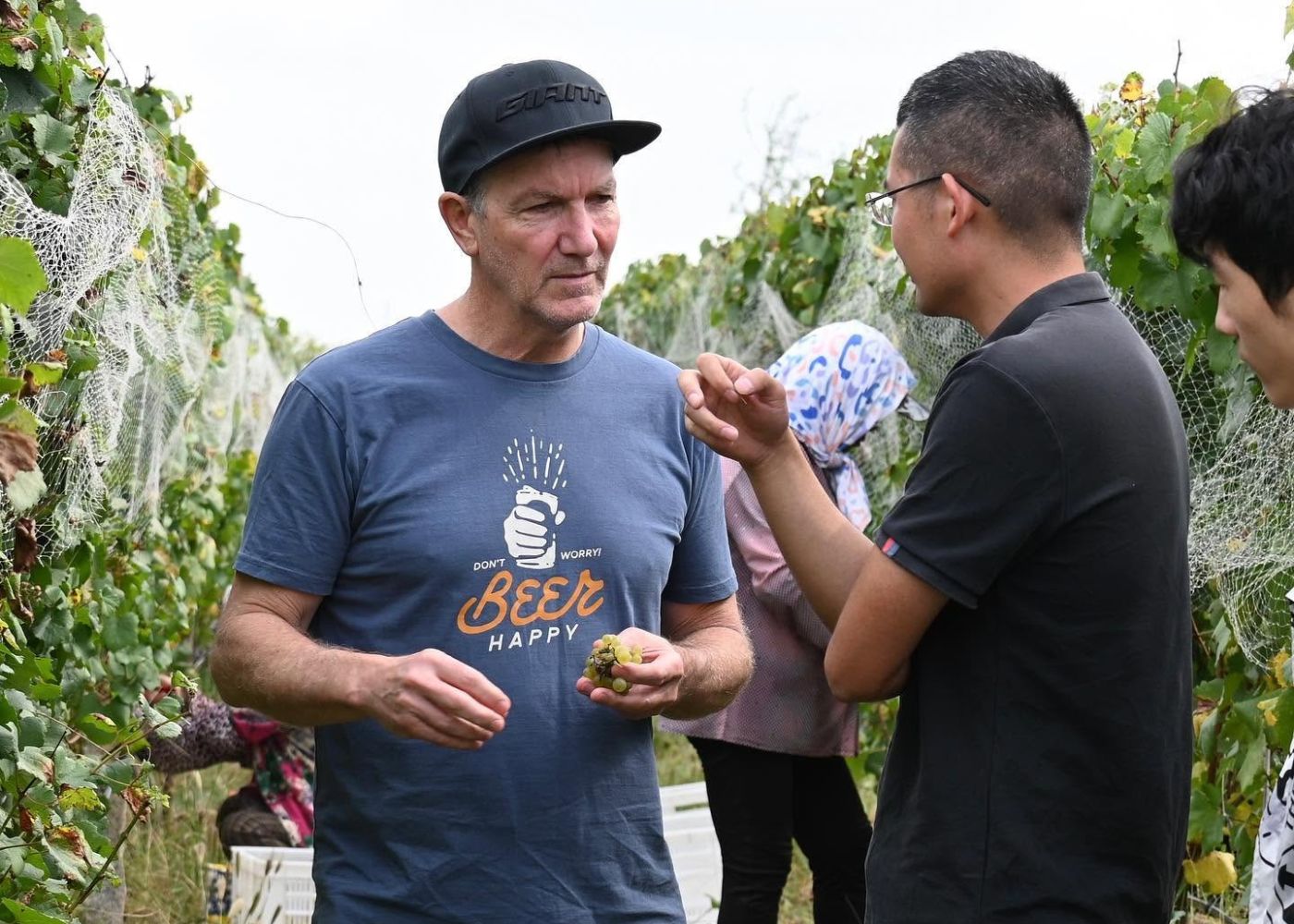
Image: Chief Winemaker - Allen Hedgman. Source: Mystic Island Winery.
It is part of a new generation of Chinese wineries seeking to establish their own voice within global wine. Rather than borrowing identities from Bordeaux, Burgundy, or Napa Valley, producers like Mystic are allowing their own landscapes, climates, and cultures to define the wines they create.
The name "Mystic" feels particularly appropriate.
Every emerging wine region passes through a period when curiosity gradually becomes confidence. The Qiu Shan Valley has reached that moment.
Through careful viticulture, patient investment, and an unwavering commitment to quality, Mystic Island Winery is helping transform one of China's most promising wine regions from an emerging destination into one that increasingly commands international attention.
It may be the role it is playing in shaping how the world understands Chinese fine wine.
Header Image: Founders - Rita Cheung & KC Kung in the centre.
Also Read:
Asia Wine Ratings Introduces Greater Judge Transparency and Detailed Feedback for Every Entry
Get your wines evaluated by leading Asian importers, distributors, retailers and trade buyers. Receive detailed feedback on quality, value and packaging and discover how your brand can improve its market potential in Asia.