
Submission
Deadline
October 16, 2026
Judging
Date
November 11, 2026
Winners
Announcement
November 26, 2026
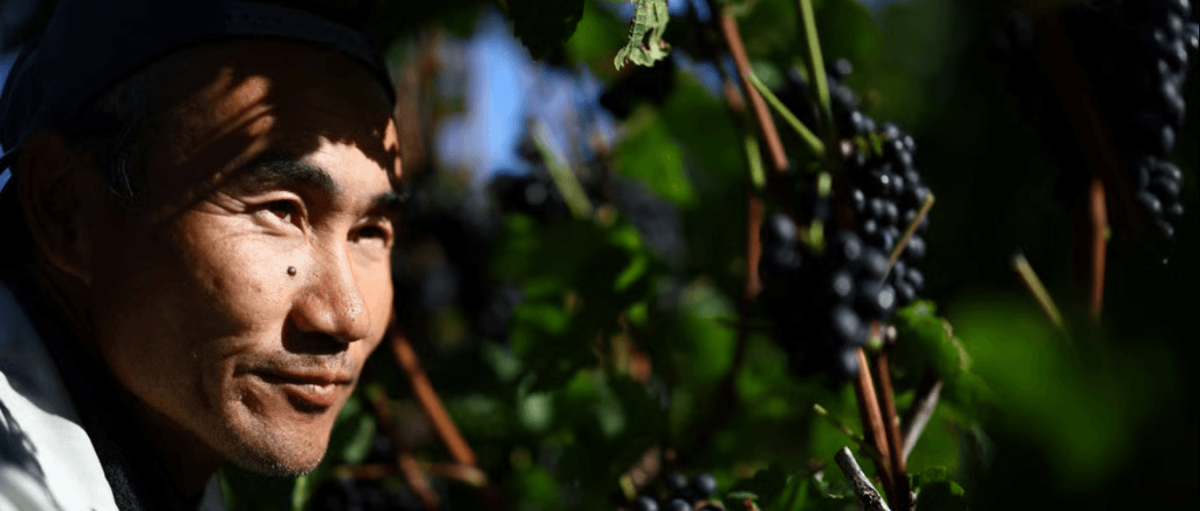
For a long time, Asian wine sat on the edges of the global conversation. It was often treated as a novelty, something tied to travel or curiosity rather than quality or identity. That perception is starting to shift. Across parts of Asia, a new generation of producers is moving beyond the question of whether wine can be made at all to how it’s made, and what makes it distinct. In climates shaped by monsoons, tropical heat, and sharp altitude changes, traditional winemaking rules don’t always hold. Instead of forcing European models onto unfamiliar terrain, winemakers are adapting to local conditions. That means new grape choices, different harvest cycles, and, in some cases, entirely different approaches to fermentation. This shift is most visible in South and Southeast Asia, but it’s also gaining momentum in countries like Japan and South Korea. The result is a wine landscape that feels less like imitation and more like exploration. These regions are not trying to replicate Bordeaux or Napa. They are building something that reflects where they are, and that’s where the real story begins.
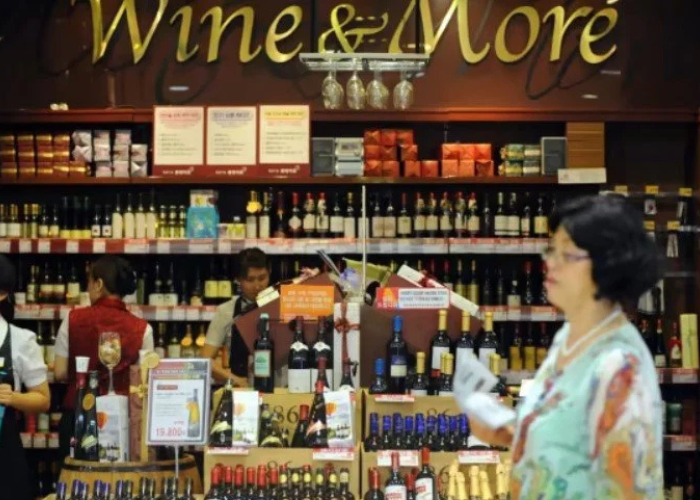
Source: Nimbility Asia
Asia’s wine industry is entering a new phase of growth and recognition on the global stage. The change isn’t just cultural, it’s economic. According to Mordor Intelligence, the Asian wine market is valued at USD 65.08 billion in 2026 and is projected to grow at a CAGR of 5.62% to reach USD 85.56 billion by 2031. That growth is being driven not just by consumption, but by production that is becoming more confident and more defined. Early efforts across Asia focused on proving that vineyards could survive difficult climates. Now the focus is sharper, improving quality, defining regional styles, and building recognizable brands. Investment is increasing, local demand is rising, and a new generation of winemakers is returning home with global experience. The result is a shift from experimentation to identity, where the goal is no longer to imitate but to stand apart.
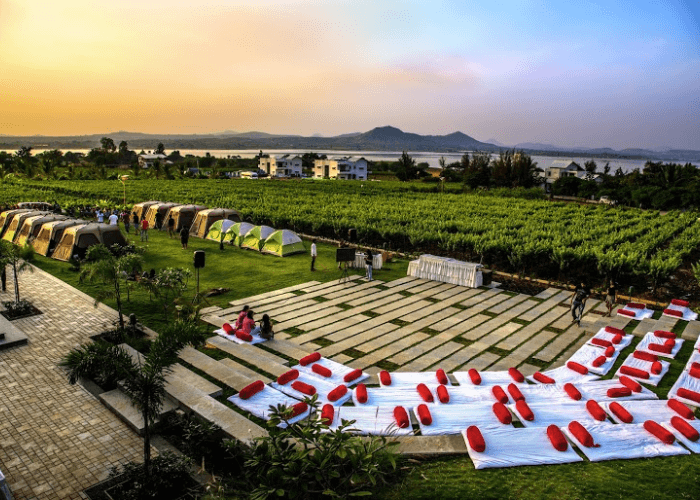
Source: Just Nashik
India’s wine identity is moving well beyond Nashik. While established names like Sula Vineyards, Grover Zampa, and Fratelli Wines continue to anchor the industry, newer regions are reshaping its direction. In Karnataka, producers such as Alpine Wineries are exploring the Mysore district’s potential for more controlled, quality-driven production. Meanwhile, in Ziro Valley, Naara Aaba is taking a different route with fruit wines made from kiwi, plum, and pear. These are not substitutes for grape wine but expansions of what Indian wine can be. Other boutique players like KRSMA Estates and Charosa Vineyards are focusing on microclimates and lower yields to refine quality. Together, these efforts point to a broader shift, where India is no longer just scaling production but also diversifying style and redefining its wine culture.
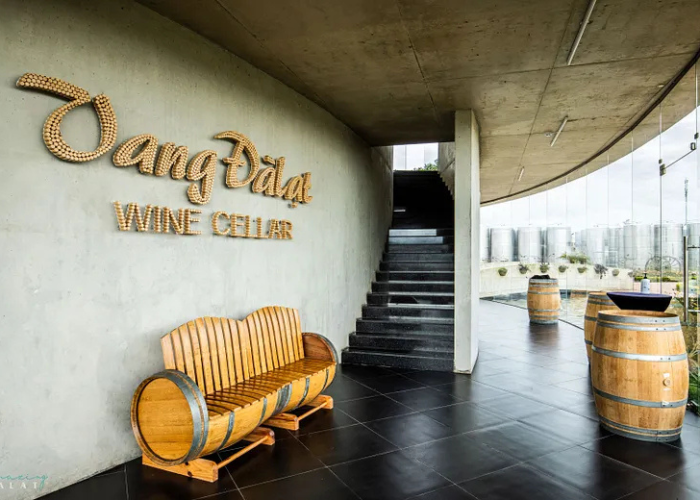
Source: Wine Tourism
Vietnam’s wine industry remains relatively small but is steadily evolving, with activity centered around a few key areas, particularly the highlands around Đà Lạt and the coastal plains of Ninh Thuận. These regions support the production of cool-climate reds like Syrah and whites such as Chardonnay, while also maintaining a significant presence of fruit wines, a segment largely driven by producers like Ladora Winery in the Central Highlands. Established names such as Vang Đàlạt continue to anchor the market, but the broader shift is subtle and ongoing, as improvements in temperature control, fermentation techniques, and grape sourcing gradually lift quality, and smaller producers begin to experiment beyond mass-market styles. Rather than competing directly with established global regions, Vietnam is building its wine identity at a measured pace, focusing on consistency and foundation, with progress that may be gradual but is clearly moving in a more defined direction.
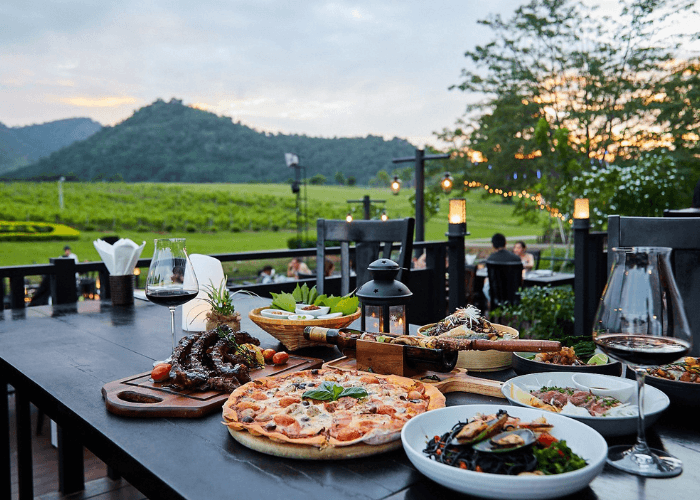
Source: PB Valley
Thailand’s wine scene is entering a more confident and technically refined phase, extending beyond Khao Yai to include diverse microclimates across the country. In the coastal southwest near Bangkok, Hua Hin has gained recognition through Monsoon Valley Vineyards, produced at Hua Hin Hills, where sea breezes help moderate heat and contribute to more mineral-driven wines. Further north, in Loei province, the Phurua highlands are home to Chateau de Loei, one of the country’s earliest modern wineries, established in 1991. Alongside established producers like GranMonte, PB Valley, and Siam Winery, the industry is refining techniques such as night harvesting, targeted irrigation, and climate-suited grape selection. The result is greater consistency and a clearer sense of style, as Thai wines move beyond novelty toward a more deliberate expression of place shaped by both geography and precision winemaking.
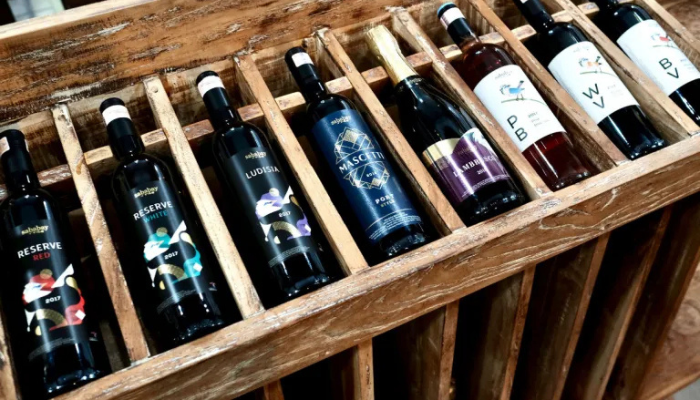
Source: Spirited Asia
In Bali, winemaking exists in conditions that challenge almost every traditional assumption. Yet producers like Hatten Wines and Sababay Winery have built a functioning industry by adapting to the environment. Humidity, heat, and disease pressure require constant intervention. Grapes are selected for survival as much as for flavor. Technology and vineyard management play a central role in maintaining consistency. The wines here are not trying to imitate established styles. Instead, they reflect a process of continuous adjustment, where experimentation is not optional but necessary.

Source: Salad Plate
Japan’s wine scene is becoming more defined and increasingly shaped by regional identity, particularly in areas like Hokkaido and Yamanashi, where producers are refining a style built on precision, balance, and restraint. While Yamanashi remains the historic heart of Japanese winemaking, known for the indigenous Koshu grape, Hokkaido has emerged as a promising frontier, benefiting from a cooler climate that supports varieties like Pinot Noir and Chardonnay. Wineries such as Grace Wine, Chateau Mercian, and Coco Farm & Winery are leading this shift, focusing on clean, food-friendly wines that align closely with Japanese cuisine. There is also growing interest in smaller producers and boutique labels that emphasize minimal intervention and site expression. What’s changing is the level of precision, with more site-specific vineyard management, careful canopy control, and refined fermentation techniques. This is evident in Nagano, where high-altitude vineyards in the Chikumagawa Wine Valley are gaining attention for Chardonnay and increasingly strong Pinot Noir. Japan’s hallmark subtlety is now translating into wines with clearer structure and a more defined sense of place.
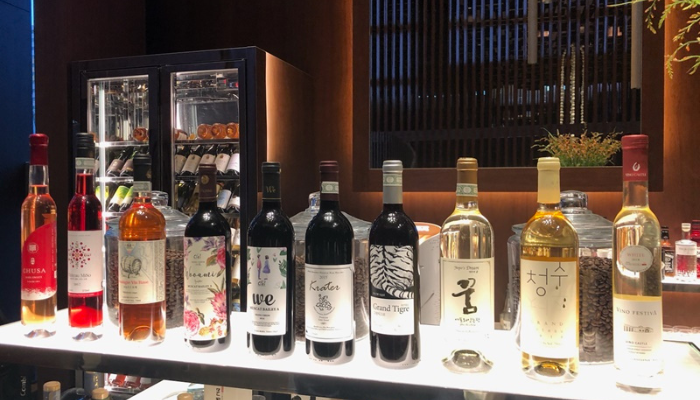
Source: Korea.net
Wine in South Korea is still in its early stages, but momentum is steadily building, particularly in regions like Yeongcheon, where producers are experimenting with both grape and fruit wines. The country’s humid summers and cold winters make traditional viticulture challenging, which has led many wineries to adopt hybrid grape varieties better suited to local conditions, while also continuing a strong tradition of fruit-based fermentation using apples, berries, and other regional produce. Producers such as Chateau Mani and Kooksoondang are helping shape this evolving landscape by blending modern winemaking techniques with elements of Korea’s long-standing fermentation culture. While the industry remains small in scale, it is defined by experimentation, adaptability, and growing domestic interest, all of which are gradually laying the groundwork for a more distinct and locally rooted wine identity.
Across Asia, a shared pattern is emerging, where regions are shaped less by tradition and more by adaptation, forcing producers in various regions to respond creatively to climate, geography, and local demand. This flexibility has turned constraint into an advantage, encouraging experimentation with grape varieties, fruit wines, and techniques that would be unconventional elsewhere, even if it sometimes comes at the cost of consistency. Challenges remain, from heat and humidity to global perception and uneven infrastructure, but progress is being driven by producers willing to push boundaries rather than follow established models. What defines this new wave is independence, as these regions are building styles rooted in their own conditions and priorities. The result is a diverse, evolving wine landscape where identity is still forming, and that sense of movement and possibility may ultimately become Asia’s greatest strength in the global wine conversation.
Header image source: South China Morning Post
Also Read:
Selling Wine in Singapore: A Market of Influence, Not Just Consumption
Selling Wine in Japan: A Market Built on Discipline, Food Culture, and Long-Term Consistency
Thailand: A Market Shaped by Tourism, Premium Hospitality, Import Dependence, and Regulatory Change
Get your wines evaluated by leading Asian importers, distributors, retailers and trade buyers. Receive detailed feedback on quality, value and packaging and discover how your brand can improve its market potential in Asia.