
Submission
Deadline
October 16, 2026
Judging
Date
November 11, 2026
Winners
Announcement
November 26, 2026
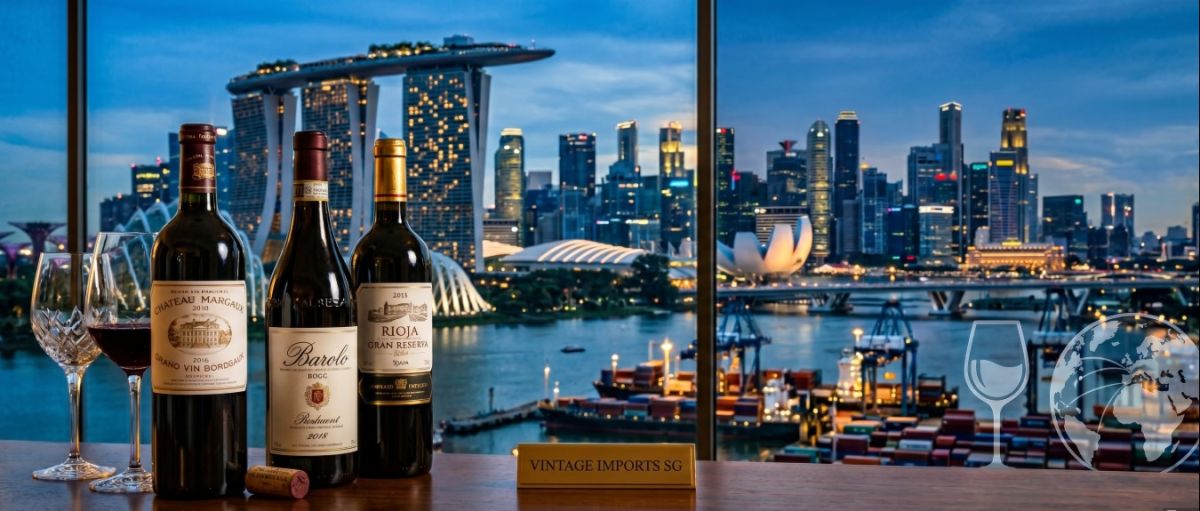
The Asian wine market represents one of the most compelling opportunities for wine producers globally, yet it remains widely unexplored due to repeated failures when it comes to market entry and expansion strategy. Producers who approach these markets with optimism and quality bottles consistently discover that what works in traditional Western markets falls flat in Asia. Richard Hemming, Master of Wine based in Singapore, has witnessed countless producers make the same mistakes, while at the same time pinpointing what is it that separates those who build sustainable businesses from those who retreat after a costly lesson.
The single biggest error producers make isn't about their wine, their marketing, or even their budget. It lies in the assumption that Asia as a single, monolithic market. "Asia is obviously massive," Hemming observes. "We could be talking about China, India, Singapore, Indonesia, Malaysia, there are many different countries, all of which have different types of market." This observation isn't merely about acknowledging that China differs from Singapore. The problem runs deeper. In a market so vast and diverse, producers consistently fail to understand where their specific brand fits within each distinct market landscape, often arriving with vague aspirations—"We want to get into Singapore"—but without acquiring a basic understanding or the ability to answer fundamental questions about pricing strategy, tax implications, import costs, or competitive positioning.
The solution to this sounds deceptively simple: do your research. But Hemming means something far more specific by this. "Visit your market. Come and actually see these places in person. Walk into restaurants, wine shops, and immerse yourself in the experience, even if it's only for a couple of days," he advises. This isn't tourism—it's reconnaissance. Walking the aisles of wine shops reveals pricing realities; examining restaurant wine lists exposes what consumers actually order; talking to sommeliers uncovers the narratives that resonate. Without this firsthand intelligence, producers are essentially flying blind, basing business decisions on assumptions that may be completely divorced from market reality.
In an era of global wine oversupply, producers face a counterintuitive reality: quality alone has become nearly ineffective as a competitive advantage. This statement sounds almost heretical to winemakers who've spent decades perfecting their craft, but the numbers are unbiased and unforgiving.
"There is so much great quality wine out there," Hemming states bluntly. "Right now, when there's global oversupply, importers, sommeliers and buyers can have their choice of tens of thousands of different wines, all of which are basically good quality." Every producer claims unique terroir, exceptional viticulture, and meticulous winemaking. These claims may all be true, yet they're simultaneously meaningless when everyone can make them. This creates what might be called the quality paradox: producing excellent wine is absolutely necessary but not entirely sufficient for success. The real question importers and distributors need answered is: "What's your business plan? Are you coming with a coherent approach that is relevant and useful for this market in particular?" Producers who simply announce they have an amazing Sauvignon Blanc or Chardonnay have brought nothing to the conversation. The importer's challenge isn't finding quality wines; it's finding wines that come packaged with a viable path to market success. This means understanding promotional budgets, staff training commitments, consumer engagement strategies, and why this particular wine deserves precious shelf space or wine list real estate over the thousands of other quality options clamoring for attention.
If quality is merely the baseline, what actually drives success? In Asian markets the answer is relationships, but not in the superficial networking sense that Western producers often assume. "Just showing up once and hoping or expecting to get a listing, that's hard," Hemming warns. What's required instead is genuine relationship building over time: visiting people at wine fairs, inviting them to your estate, dining at their restaurants as a customer, and demonstrating through consistent presence that you're committed to their success, not just your own sales targets. This emphasis on relationships creates an uncomfortable reality for producers: market entry is inherently expensive in ways that extend far beyond product costs. "There is no substitute for having the winemaker or the brand owner in the room," Hemming insists. "Whether that's talking to fellow professionals or whether it's hosting events, that human connection is so much of what makes wine interesting."
Having a spokesperson make themselves present during this stage of building relationships and working in collaboration to maintain it over time shows credibility and commitment that cannot be conveyed virtually. When a distributor meets the winemaker, they aren't just evaluating the wine, they're evaluating whether this producer will be a reliable, engaged partner when challenges arise or when additional promotional support is needed. Asian markets particularly value these personal connections, viewing them as essential indicators of long-term commitment rather than transactional conveniences.
When Hemming outlines what proper market entry actually requires, the resource implications become stark. Producers need to commit to regular physical presence for training retailer and restaurant staff and host consumer-facing events, from intimate private dinners to larger masterclasses. They need PR and promotional support if their volumes and budgets justify it, as well as social media management that may require local language capabilities. "Before you even make the plan, you've got to decide, have I got the resources to support this?" Hemming emphasizes. This honest self-assessment often reveals that producers lack the bandwidth or budget for proper market entry. However recognizing this early doesn't really translate to failure. In fact, it's exactly the kind of strategic clarity that prevents wasting resources on half-hearted efforts that were doomed from the start.
For those who do have the resources, the commitment typically spans at least twelve months of sustained activity. This isn't about a single trip to a wine fair or one promotional dinner. It's about building consistent visibility and demonstrating staying power. Markets remember producers who generate excitement with their initial launch but then disappear. That reputation is nearly impossible to rehabilitate.
The abstract principles of market entry become clearer through concrete examples. Hemming points to three different approaches that have proven successful, each offering distinct lessons.
Penfolds: The Lifestyle Marketing Master
Penfolds' success in Asian markets stems from a sophisticated understanding that they're not selling wine—they're selling aspiration. "Their lifestyle marketing is one of the reasons why they are so successful," Hemming observes. "Very often, when you see their marketing, their advertising, they're not really talking about the wine. They're talking about the lifestyle, the kind of luxury, this aspirational element." This approach works because it sidesteps the quality paradox entirely. Instead of depending on their terroir or winemaking techniques to set them apart, they compete on the emotional and social value their brand delivers. The wine becomes a vehicle for expressing sophistication, success, and belonging to an aspirational lifestyle.
The lesson for other producers here is to identify whether your brand has the potential to exploit this lifestyle dimension. Can you forge partnerships with luxury hotels? Can you present yourself on social media through carefully curated luxury associations? For some wines, particularly those at higher price points, this lifestyle positioning may offer more leverage than emphasizing viticultural details that most consumers won't understand or remember.
Tasmania: The Power of Regional Collaboration
When a Tasmanian delegation visited Singapore, they demonstrated a completely different approach. One based on collective strength rather than individual brand power. Seven or eight producers arrived with backing from local government funding and presented a unified regional message: "Tasmania has this message. This is what it is. You can really understand Tasmania quite easily," Hemming notes. "It's cool climate, it's single varietal. They have super top quality." By eliminating the confusion of multiple competing narratives, the Tasmanian producers made it easy for importers, distributors, and sommeliers to understand and communicate their value proposition. This collaborative approach solves a critical problem for smaller producers: the difficulty of achieving market visibility alone. By pooling resources and presenting a coherent regional identity, producers can share the costs of market entry while amplifying their collective impact. A sommelier who learns a clear, simple Tasmania story can confidently explain it to customers. That same sommelier confronted with eight different individual producer narratives, each emphasizing different attributes, faces a much higher cognitive load and is less likely to actively promote any of them.
The key insight is that clarity and simplicity matter more than individual differentiation at the market entry stage. Once the regional identity gains traction, individual producers can build on that foundation with their specific stories.
Tolley Puddle: Letting the Wine Prove Itself
Tolley Puddle's strategy offers a third path: competitive blind tastings where they place their wines alongside prestigious benchmarks, including top Burgundies. "They're completely risking their reputation here," Hemming points out, "because if their wine doesn't show up on the day and isn't really widely liked, then it's going to backfire." But this risk is precisely what makes the strategy powerful. When participants rate a Tolley Puddle wine higher than a renowned Burgundy, the impact is profound because the comparison was fair and unbiased. The wine spoke for itself in the most credible possible format. This approach works particularly well for producers with genuinely exceptional wines who struggle to overcome pricing skepticism or preconceptions about their region's quality level.
The limitation, of course, is that this strategy demands genuine confidence in your product's quality and the courage to accept public failure if the wine doesn't perform.
Singapore's role in Asian wine markets extends far beyond its small population. With only 6 million residents and perhaps 500,000 to 1 million actual wine drinkers, the market seems almost insignificant. Yet multiple factors make Singapore strategically crucial. First, its relative wealth translates to high discretionary spending on wine. The tax structure, while initially seeming punitive, actually creates market advantages for premium wines. The volumetric tax adds approximately 10 Singapore dollars per standard bottle, with an additional 9% GST on top. This means entry-level wines become expensive in absolute terms, reducing the pricing gap between cheap and premium bottles. "That means it's harder for mass market volumes to kind of win market share here," Hemming explains, "but it means that more expensive wines proportionally, they don't look that much more expensive than what would be considered cheap wines in any other market." A wine that might cost $15 elsewhere and $30 in Singapore sits much closer to a wine that costs $50 elsewhere and $70 in Singapore. The premium wine's proportional price increase is much smaller, making it feel more accessible relative to cheaper alternatives.
Second, Singapore functions as a bonded warehouse hub for the broader region. Producers can import wine without paying taxes, storing it in bonded facilities and re-exporting to neighboring markets without ever incurring Singapore tax obligations. "If I was doing Malaysia, Indonesia, it's a no-brainer to have like four or five pallets in a bonded warehouse in Singapore, and plant three, four countries," Hemming confirms. This logistical advantage means Singapore often serves as a testing ground and distribution hub simultaneously. Producers can establish their regional presence with minimal inventory risk while maintaining the flexibility to serve multiple markets from a single strategic location.
In an age where consumers and trade buyers alike conduct instant research on their phones, brand distinctiveness takes on new importance. Hemming emphasizes what he calls "maximum Googleability"—ideally creating a brand name of one or two words that won't match anything else. His favorite example: "There's a winery in Margaret River that makes a single vineyard wine called Suckfizzle. You type in the word Suckfizzle into Google or any AI thing, there is only one match." This unique searchability eliminates confusion, ensures all online mentions benefit the brand, and makes word-of-mouth recommendations far more effective. Compare this to a wine called "The Reserve" or "Mountain View"—generic terms that generate thousands or millions of search results, none of which help a consumer find that specific wine. This principle extends beyond wine to any brand: Coravin and Vivino succeeded partly because their names are completely unique and searchable.
For producers developing new brands or considering rebranding, this googleability criterion offers a practical test. If your proposed name generates search results unrelated to your wine, you've created an unnecessary marketing handicap. On the label itself, Hemming's advice is refreshingly pragmatic and anti-precious: "If you are from a recognisable variety or from a recognisable region, make that prominent." If you're producing Chablis, shout about it. Don't assume sophisticated consumers will recognize your region from subtle cues. "Why not put Chardonnay on the label as well?" Hemming suggests. "I think don't try and be too precious about the traditions or the expectations that people have. We're about selling." This comment cuts against the tendency among some producers to treat their labels as artistic expressions rather than sales tools. The goal is clarity and quick comprehension, not mystery or sophistication. A sommelier should be able to glance at your label and immediately understand what you're selling and why it might interest their customers.
Perhaps no aspect of market entry frustrates producers more than finding reliable importers and distributors, particularly in markets with language barriers. Hemming's advice here is almost brutally honest: "You've got to do it the hard way. You've got to do it with a lot of work, visiting people, talking to people."
Wine fairs offer the most efficient path to meeting relevant contacts. ProWine Singapore, VinExpo Hong Kong, Wine Paris, ProWine Dusseldorf, and Shanghai's wine events all serve as crucial networking venues. But attending isn't enough—producers need to arrive with clear objectives, research on which importers to target, and a compelling reason for those importers to pay attention.
The cold reality is that most producers will need to approach dozens of potential partners to find one or two who are genuinely interested and capable. The process is time-consuming, often discouraging, and lacks shortcuts. Language barriers compound the challenge, particularly in markets like China where the relationship-building process may need to occur through translators or require local partners who understand both the wine industry and local business culture.
When producers finally secure meetings with potential importers, many waste the opportunity by delivering the same generic pitch everyone else offers. "I wish that more producers would ask that question, because it would make things a lot easier," Hemming laughs when asked what importers want to hear.
The answer circles back to the business plan question. Importers need to know: How will you support this partnership? What's the promotional activity? What budget is available for discounting, sales incentives, or trips to bring sommeliers to your estate?
"Otherwise, you're just turning up with the same story as everyone else," Hemming emphasizes. "You know, we have a lovely wine, it's great quality wine, it comes from a unique place. But then so what, how am I going to remember your brand?"
This framing reveals what importers are actually evaluating. They're not primarily judging your wine—they assume it's good or you wouldn't be in the meeting. They're judging whether you'll be a partner who makes their job easier or harder. Will you provide marketing materials? Will you visit to train staff? Will you be responsive when issues arise? Will you invest in events that drive sales? Or will you simply ship bottles and expect the importer to magically create demand?
The producers who stand out are those who arrive with a partnership mindset, ready to discuss how they'll share the burden of market development rather than expecting the importer to shoulder it alone.
Throughout the conversation, a consistent theme emerges: successful market entry requires an investment mindset rather than an expense mindset. Producers who view their market entry costs—travel, events, promotional materials, relationship building—as expenses that need minimizing will struggle. These aren't costs to be reduced; they're investments that enable success.
This reframing has practical implications. A producer wondering whether they can afford to visit Singapore twice in the first year is asking the wrong question. The right question is whether they can afford not to visit twice, given that relationship building requires consistent presence. A producer hesitating about funding a sommelier training event is missing the point: that event isn't an optional nice-to-have, it's how their wine gets sold.
The producers who succeed are those who've internalized that market entry represents a multi-year investment with uncertain returns. They've secured the resources—financial, temporal, and personal—to sustain that investment through the inevitable slow periods and setbacks. They understand that building a sustainable Asian wine business isn't a sprint or even a marathon; it's establishing infrastructure that will generate returns for years or decades.
Hemming's parting advice encapsulates his entire approach: "Come and see us. It's a great place to visit." This isn't merely promotional cheerleading for Singapore. It's a reminder that successful market entry begins with genuine curiosity and engagement with the market on its own terms.
Producers who visit expecting to discover markets that match their preconceptions will be disappointed. Those who visit ready to learn how these markets actually function—what consumers want, what trade buyers need, what barriers exist, what opportunities remain unexploited—position themselves for success.
The Asian wine markets represent tremendous opportunity, but they punish shortcuts and reward sustained commitment. Producers who arrive with quality wines, coherent business plans, partnership mindsets, and willingness to invest in relationship building will find sophisticated, growing markets with consumers eager to discover new wines. Those who arrive expecting their wine's quality to carry them will join the long list of disappointed producers wondering why their obviously excellent wine failed to gain traction.
As Hemming puts it: "You really need to know what you're asking when you approach these markets in the first place." The producers who succeed are those who've done the work to answer that question honestly before they ever book their first flight.
Get your wines evaluated by leading Asian importers, distributors, retailers and trade buyers. Receive detailed feedback on quality, value and packaging and discover how your brand can improve its market potential in Asia.