Submission
Deadline
October 16, 2026
Judging
Date
November 11, 2026
Winners
Announcement
November 26, 2026

Patrick Madendjian, Managing Director of Moët Hennessy North Asia and Global High Energy, shares his perspective on navigating Asia’s changing luxury spirits market, building brand desirability, adapting to evolving consumer expectations, and creating new opportunities through culture and contemporary consumption occasions.
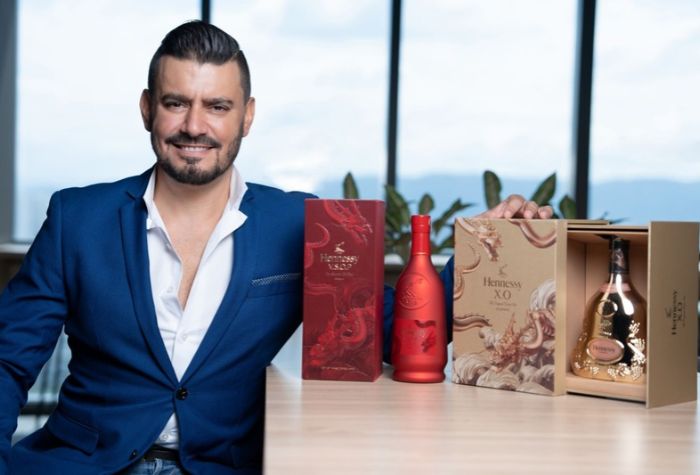
Image: Madendjian presenting the 2024 limited-edition Hennessy designs created by Yang Yongliang. Source: Moët Hennessy Diageo
Asia is not one market moving at one speed, and growth cannot depend on a synchronized recovery.
The latest public LVMH disclosure is encouraging: Wines & Spirits recorded 5% organic growth in the first nine months of 2026; for me, the implication is clear. We must earn growth market by market and occasion by occasion. That means staying close to real consumer demand, protecting desirability, and investing with discipline rather than waiting for macroeconomic conditions to do the work for us. We must lead long-term value while delivering strong short-term performance.
In an uneven market, precision beats prediction.
Integrate what creates leverage; localize what creates meaning.
Across Hong Kong, Macau, Taiwan, and South Korea, regional integration can strengthen capabilities, talent, speed, knowledge sharing, and execution standards. But consumer motivations, cultural codes, customer structures, and relevant occasions remain local.
Our cluster organization aims to provide a stronger engine, not a uniform answer. Local teams retain ownership of how a Maison enters culture, serves customers, and earns relevance.
Copy-and-paste is not a cluster strategy.
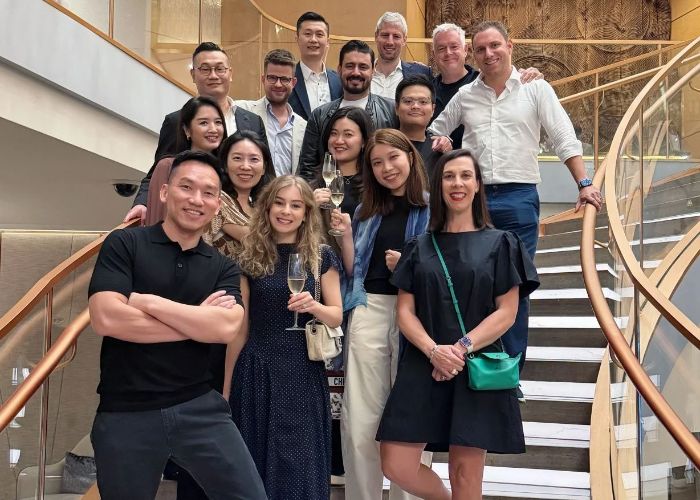
Image: North Asia Moët Hennessy Executive Committee (ExCo) and GenEx cohort during a gathering in Macau. Source: Moët Hennessy Diageo.
Focus is not doing less. It is making fewer choices matter more.
Core products deserve sustained investment because they carry memory, trust, scale, and brand meaning. Innovation has a role when it unlocks a genuine new occasion, format, category entry point, or consumer need. And when it strengthens the core rather than distracting from it.
My test is simple: does the initiative recruit, reinforce desirability, and have the potential to repeat? If not, it is probably complexity disguised as innovation.
At the end of the day, we are blessed to manage the strongest, most exceptional portfolio of Maisons in the Premium+ Wines & Spirits industry. We obsess over building the desirability of our Maisons within culturally relevant occasions for our consumers. In a world where people are drinking less, but better and higher quality… we are the best equipped.
Innovation should open a door, not create another corridor.
Luxury is moving from display to discernment.
Consumers still value craftsmanship, rarity, and beauty. But they increasingly want those qualities to feel meaningful to them, through provenance, personalization, service, cultural relevance, and memorable experiences. I was reading a report from Bain earlier this year, and I fully agree with the analysis. They described a broader structural shift from conspicuous consumption toward experiences, emotion, connection, and self-reward.
This does not make luxury less exacting. It makes it more demanding. A prestigious name may create attention, but relevance and execution must justify the choice.
Luxury today must feel personal before it feels expensive.
Pricing power is an outcome, not a strategy.
A brand earns the right to price through the quality of its product, the strength of its story, the consistency of its execution, and the desirability it creates over time. Price should follow perceived value. It does not run ahead of it.
That requires coherent product tiers, strong retail and hospitality execution, selective innovation, and disciplined activation. In pressured periods, short-term volume can be tempting. But repeated discounting teaches consumers to wait rather than desire.
Desirability gives permission; value closes the sale.
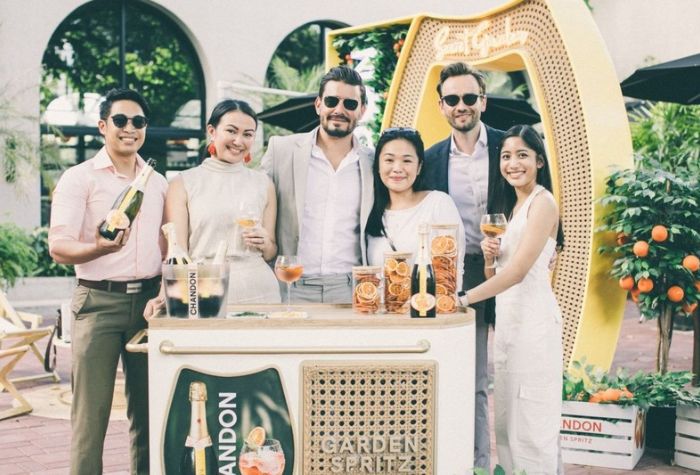
Image: Chandon Garden Spritz is now officially launched in the Philippines.
We should never chase youth. We should earn the next generation of legal-drinking-age adults.
Younger adults are not one attitude or one drinking behavior. Public IWSR research shows renewed alcohol participation among legal-drinking-age Gen Z adults, alongside broader category repertoires, above-average spirits engagement, and more frequent on-trade visits. Yet it also shows continued pressure on budgets and moderation.
The objective is not a moment of cultural visibility. It is durable affinity: repeat choice after the campaign, curiosity about the liquid and the Maison, and relevance across more than one occasion.
At the same time, established consumers should never feel that the brand they built a relationship with has left them behind. We can evolve expression without abandoning our codes.
The goal is relevance without rupture. The holy grail is to become timeless.
Travel retail is not only a shop at the airport. It is where a brand can begin a cross-market relationship.
Travelers are in a discovery mindset. They can learn, taste, compare, gift, and encounter products or rituals that are unavailable at home. But we should not confuse spectacle with effectiveness. Travel retail is not my area of expertise, but I have been told recently by a colleague that the latest ACI Asia-Pacific & Middle East study found that passenger mix and behavior now matter more than traffic alone; product choice and pricing remain major purchase drivers, while around 70% of decisions are still impulse-led.
So the experience must be distinctive but frictionless. Alongside direct sales, strategic value can be considered through guided trial, product discovery, quality of engagement, GTR exclusive offers, brand consideration, and continuity into the traveler’s destination market.
The airport moment should start a relationship, not end at the receipt.
High Energy is not a demographic. It is a system of occasions where culture, social connection, music, and brands meet.
Nightlife remains important, but High Energy is broader: music, festivals, contemporary hospitality, vibe dining, beach clubs, performance, and new social rituals. Incremental growth means entering occasions where a brand was not naturally considered before, while making sure you are not drastically displacing its established moments.
I would select platforms against five tests: cultural credibility, legal-drinking-age audience fit, a distinctive product or serving role, potential for repetition, and rigorous protection of brand and responsible-consumption standards.
A logo at the edge of a stage is not cultural relevance. The brand must contribute something authentic to the experience.
The connection between Hennessy and music is decades old, vibrant, organic, and genuine. This is why a Hennessy Artistry activation in a Music Festival is always a hit. The festivalgoers live a fuller, more holistic experience when they visit the Hennessy installation as part of their day/night.
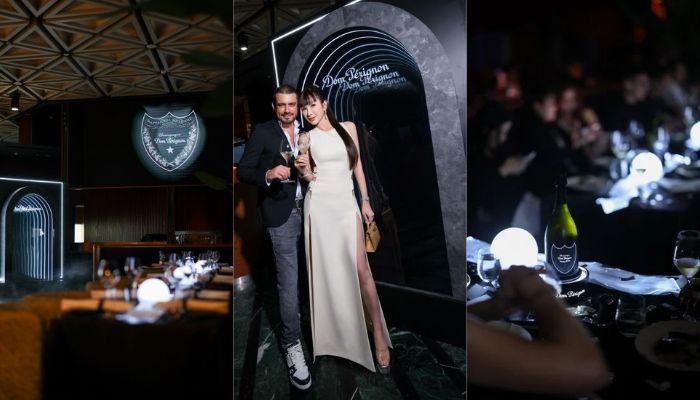
Image: Night at HighHouse, with the premiere unveiling of Dom Pérignon White Luminous Vintage 2015.
The same applies to other Maisons in our portfolio. When a pyramid of Dom Pérignon bottles appears in a nightclub, you know that the party is finally starting and the party-makers are in the house. The connection between nightclub celebrations and Dom Pérignon has become instinctive. And the magic happens when the desirability of Dom Pérignon has been so strongly built on the paradox of light and dark. Of night & day. Of High Energy & Haute Oenology.
In a nutshell, we try to be culturally present and relevant. Never culturally parasitic.
In conversation with Malvika Patel, Editor and VP, Beverage Trade Network
Also Read:
Where Are the Oranges? Understanding Orange Wine
Mystic Island Winery: Helping Write the Next Chapter of Chinese Fine Wine
Inside Asia’s Evolving Wine Culture With Roberto Duran MS
The 2026 Asia Wine Ratings results are now live. Importers, distributors and retail wine buyers across Asia, explore this year’s winners and find award-winning wines to bring into your market, add to your portfolio or stock on your shelves.