
Submission
Deadline
October 16, 2026
Judging
Date
November 11, 2026
Winners
Announcement
November 26, 2026
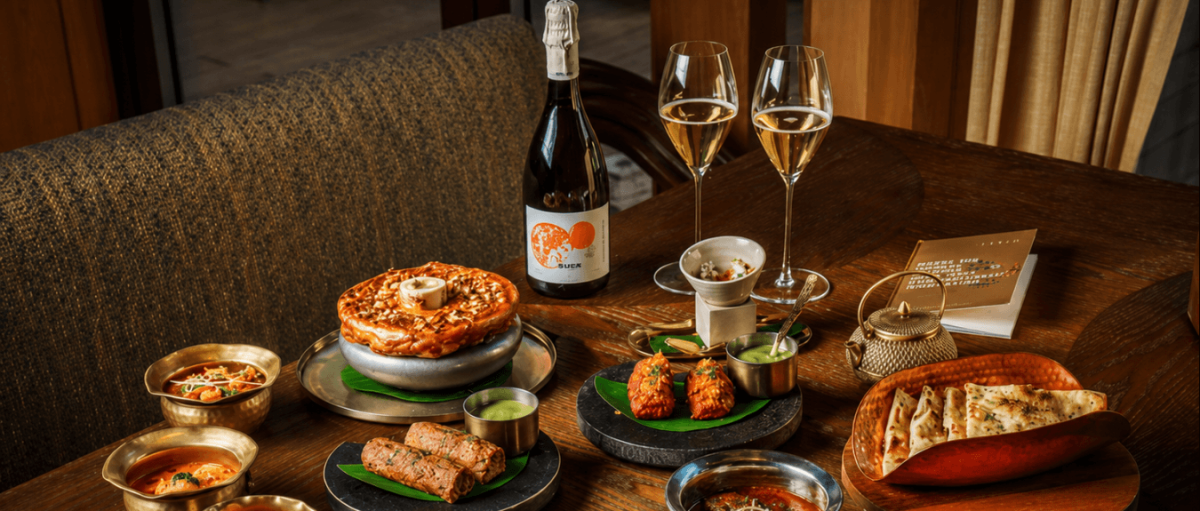
There’s a moment in a modern Indian restaurant when the table goes quiet. Not because the food is overwhelming, but because it’s doing too many things at once. A single dish can be smoky, tangy, rich, and bright in the same bite, with crunch, heat, and creaminess all competing for attention. You’re not analyzing it; you’re trying to keep up with it. And then you take a sip of wine. If it’s wrong, everything feels louder and less in sync. The spice spikes, the alcohol sticks out, the dish loses its flow. But when it works, it changes the experience. The wine moves with the food, softening, lifting, and connecting elements you didn’t even notice before.
That shift is exactly why modern Indian cuisine has forced a rethink in how we approach wine. At restaurants like Indian Accent, Gymkhana, Haoma, and Trèsind Studio, dishes are built with structure and intent, not just flavor. Yet the old advice still lingers: play it safe, reach for something off-dry, avoid anything too bold. The problem is, the food has moved on. Pairing today isn’t about managing spice; it’s about understanding the dish. Where the weight sits, where the acidity cuts through, how the texture lingers. Less about rules, more about instinct. Because when the food evolves, the pairing has to catch up. In this article, we explore how modern Indian cuisine is reshaping wine pairing, from texture-led matches and chilled reds to unexpected combinations that challenge everything we thought we knew about pairing Indian food with wine.
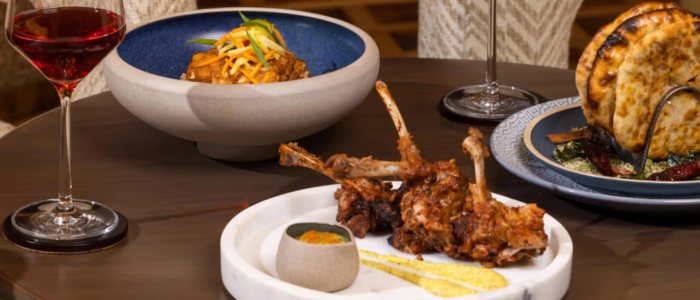
Source: Taj Hotels
The idea that Indian food only pairs well with sweet or off-dry wine has been repeated so often that it almost feels unquestionable. And to be fair, there’s logic behind it. Spice can heighten alcohol, exaggerate tannins, and make certain wines feel sharper than they actually are. A little residual sugar softens the edges and keeps the pairing approachable. But somewhere along the way, that advice became less of a guideline and more of a limitation.
The reality is that modern Indian cuisine is far more layered than the stereotype it’s often reduced to. A single dish can carry smoke from the tandoor, richness from ghee, brightness from citrus, and depth from fermentation, all before the spice even enters the conversation. At restaurants like Indian Accent or Masque, chefs are building dishes with precision and progression, where texture and structure matter just as much as flavor. That’s also why many sommeliers are beginning to rethink the old rules entirely.
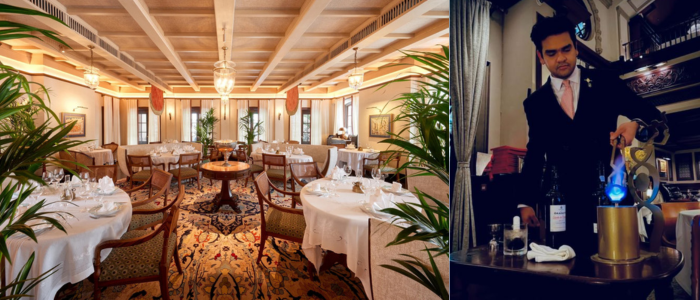
Source: Prince And The Peacock
Harnil Mathur, Associate Director of Wine at Black Sheep Restaurants in Hong Kong, who has worked with some of the finest Indian restaurants, including Prince and the Peacock, New Punjab Club, and Rajasthan Rifles, believes some of the biggest misconceptions around Indian food and wine pairing are:
“The biggest misconception is that Indian food is 'too spicy’ or ‘too complex’ to pair with wine. In reality, Indian cuisine is incredibly nuanced; spice is just one dimension. There’s acidity, richness, texture, and aromatics, all of which open up exciting pairing possibilities.
Another common misunderstanding is approaching Indian food as a single category. The diversity between, say, a North Indian dish and a South Indian preparation is vast. Once you start thinking regionally and structurally rather than just focusing on heat, wine pairing becomes much more intuitive and rewarding."
That shift changes the conversation completely. Instead of asking how spicy a dish is, the more interesting question becomes: what is the dish actually trying to do?
Texture Leads the Conversation
Modern Indian dishes are deeply textural. At Masque, the Iberico pork roast layered with seaweed poha and bacon sev plays with contrast in every bite, combining tender, fatty pork with crisp, salty crunch and umami depth. A light-bodied Syrah or chilled Pinot Noir works beautifully here, cutting through the richness while echoing the dish’s smokiness without overpowering its delicacy. It’s a pairing built less on spice and more on movement, texture, and balance. Texture builds bridges where flavor alone cannot.
Acidity Over Sweetness
Take Trèsind Studio’s pani puri with avocado, jicama, and green plum aguachile as an example. Bright, herbaceous, creamy, and sharply acidic, the dish already moves with incredible energy on the palate. Pairing it with a refreshing Sauvignon Blanc or a mineral-driven sparkling wine amplifies that freshness instead of muting it. The citrus and green notes in the wine mirror the aguachile, while the acidity keeps pace with the spice, herbs, and crunch. Acidity doesn’t just balance the dish here; it sharpens and extends it, making every bite feel as vivid as the first.
Heat as One Element, Not the Only One
Spice still matters, but it doesn’t need to dominate decisions. Consider a rich butter chicken at Gymkhana. The sauce is creamy, tomato-driven, and moderately spiced. An oaked Chardonnay or a complex Champagne works beautifully here, the richness of the wine matching the buttery texture of the sauce while the acidity cuts through the fat and keeps the pairing lifted. The subtle layers of oak also complement the tomato's sweetness and the warmth of the spices, without overwhelming the dish.
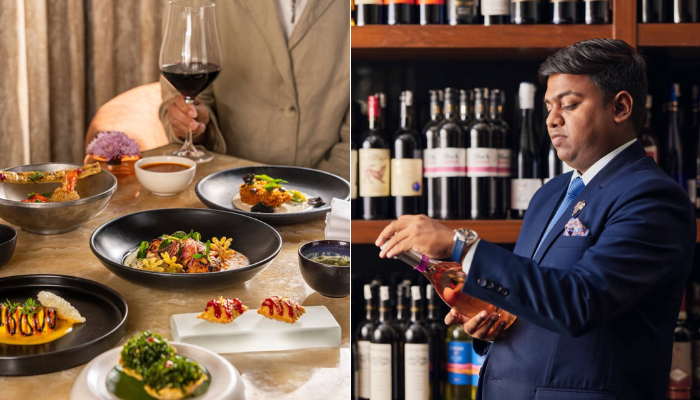
Source: Indian Accent Mumbai
We asked Kevin Rodrigues, Head of Wines at EHV International and Indian Accent, What’s your starting point when building a pairing for a complex Indian dish?
“When it comes to Indian dishes, the starting point isn't the protein; it is the masala and the cooking technique, as even a humble chicken can be converted to a robust and complex dish with the use of a Tandoor and Spiced Marinades. Understanding the acid, spice, fat, and texture of the dish plays a major role in pairing wines with Indian Food. I personally pay more attention to the sauce or the curry component of the dish to help anchor the wine as the liquid covers more surface on the palate”.
Breaking the “Safe Pairing” Mindset
This is where things get interesting! A fried prawn koliwada dish paired with Champagne might seem indulgent, but it works for a reason. The bubbles cut through oil, the acidity lifts the spices, and the palate resets after every bite. Sparkling wine isn’t just for celebrations. It’s one of the most practical pairing tools for Indian food. Then there’s the idea of chilled reds. A lightly chilled Gamay alongside a spiced lamb dish can feel more balanced than a heavy, room-temperature red. Temperature changes perception; a cooler wine feels fresher, less aggressive, and more in sync with spice.
Orange wines, with their grip and subtle bitterness, find surprising harmony with pickled elements. Dishes incorporating achar-style flavors or fermented components can pair beautifully with skin-contact wines that echo those savory, slightly funky notes. Even bitterness has a place. Slightly bitter wines or amaro-style profiles can act as a reset against rich, fried, or heavily spiced dishes.
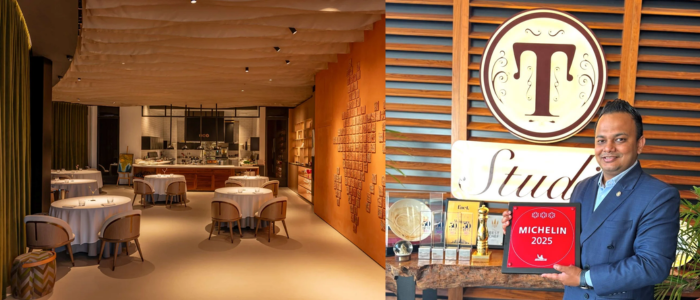
Source: Trèsind Studio
Nikhil Surve, Head Sommelier at Trèsind Studio, recalls a moment that changed his perspective: “Tandoori lamb chops with Châteauneuf-du-Pape. It sounds like it should be heavy on heavy, but it never felt that way. The garrigue notes of dried herbs and warm spice just slipped into the tandoori marinade as if it belonged there. The fruit softened the char, and the tannins were rounded enough to handle the fat without clashing with the masala. It didn’t feel like two elements side by side; it felt like everything was speaking the same language.”
The Shift in Modern Indian Dining
What’s driving all of this is a broader shift in how Indian food is being cooked, plated, and experienced today. Chefs are rethinking tradition without losing its identity, using fermentation, controlled smoke, global techniques, and sharper textures to create dishes that feel both rooted and contemporary. Restaurants are leading that movement, building menus that demand the same level of thought from the wine glass as they do from the kitchen. Wine is no longer an afterthought or simply something served alongside the meal. It has become part of the storytelling, designed to enhance, contrast, or even challenge what’s happening on the plate. That’s also why the old pairing rules no longer feel enough. The most exciting pairings today come from curiosity rather than caution, looking at texture, acidity, fat, temperature, and structure instead of relying on predictable choices. Modern Indian cuisine no longer needs safe wine pairings. It needs thoughtful ones who are willing to take risks, create tension, and sometimes surprise the diner completely.
One Question, Three Somms!
To bring these ideas together, the featured sommeliers in this article shared the pairings that changed the way they think about Indian dining, not in theory, but through real moments from service that stayed with them.
Kevin Rodrigues
“One of the most memorable wine pairings for me was the Crispy Sea Bass with Caper Coconut Curry we did on one of the Tasting Menus at Indian Accent Mumbai. Now, ideally looking at the ingredients, one would pair a nice crisp high-acid white wine. We had paired a Valpolicella Superiore By Fattoti Col de la Bastia, and it worked in such great symphony with the Kasundi (yellow mustard) in the Coconut Curry that even though the protein was fish, it worked perfectly with a red wine”.
Harnil Mathur
“One pairing that has stayed with me is a Kabinett style of Riesling from Mosel in Germany with Hyderabadi chicken dum biryani. It worked beautifully because of the balance. The wine’s gentle sweetness and vibrant acidity complemented the aromatic spices and richness of the dish, while also refreshing the palate with each bite. What made it memorable wasn’t just the technical success, but the emotional response; it’s a pairing that feels both surprising and completely natural at the same time. It also reflects what I enjoy most: bridging classic wine styles with deeply rooted Indian flavors”.
Nikhil Surve
“One pairing that has really stayed with me was an innovative mushroom dish inspired by the Tibetan influence seen across North Eastern cuisine. Oyster mushrooms were sliced into noodle-like strands and tossed in a wild mushroom XO sauce, creating a dish that felt earthy, silky, and deeply umami-driven, yet incredibly elegant. Even the broth was made from mushroom trimmings, adding depth and continuity. We paired it with a sparkling Dassai 45 Junmai Daiginjo saké, inspired by the rice beers of the North East. The soft sparkle cut through the richness effortlessly, while the delicate fruit and polished rice notes lifted the mushrooms beautifully, creating a pairing that felt seamless and harmonious”.
What makes these answers compelling isn’t just the wines or the dishes. It’s the thinking behind them. The risks taken, the unexpected combinations, the moments where something clicked in a way that surprised even the person who created it. And that’s really the point. The best pairings with modern Indian food don’t come from rules. They come from experience, instinct, and a willingness to try something that shouldn’t work, but somehow does.
Header image source: Hong Kong Madame
Also Read:
Selling Wine in India: A Market Defined by Regulation, Pricing Pressure, and Long-Term Opportunity
Cracking the Asian Wine Market: A Strategic Guide for Global Producers
Selling Wine in Malaysia: A Structured Market with Long-Term Opportunity
Get your wines evaluated by leading Asian importers, distributors, retailers and trade buyers. Receive detailed feedback on quality, value and packaging and discover how your brand can improve its market potential in Asia.