
Submission
Deadline
October 16, 2026
Judging
Date
November 11, 2026
Winners
Announcement
November 26, 2026

India’s wine market is changing quickly, and Amber Deshmukh, Business Development Manager at Monika Alcobev Limited, has had a front-row view of that evolution. From shifting consumer tastes and price sensitivity to the growing importance of education, packaging, and long-term brand building, Amber brings a practical understanding of what works in one of the world’s most complex wine markets. Recently awarded the Advanced Sommelier qualification by the Court of Master Sommeliers and named Second Runner-Up at the ASI Best Sommelier of India 2025, he combines technical expertise with strong commercial insight. In this feature, Amber shares his perspective on emerging grape varieties, underrepresented regions, effective price points, and the balance between domestic and imported wines. He also explains why the right importer, consistent staff training, and genuine value for money matter more than short-term promotions. His insights offer a clear, grounded look at where Indian wine consumption is heading and what producers need to understand before entering the market.
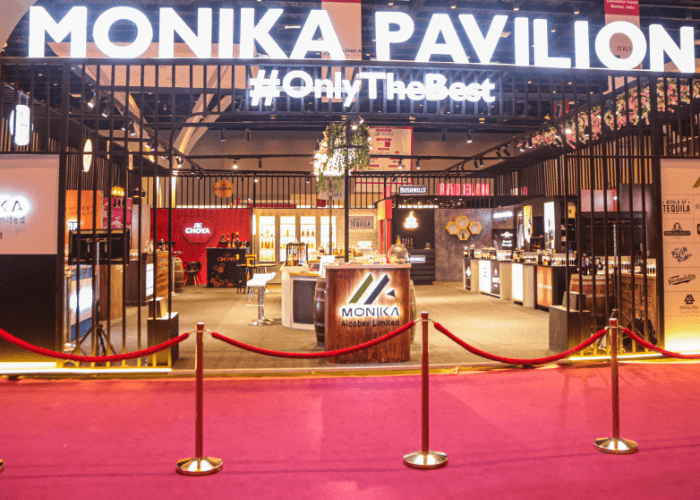
Source: Monika Alcobev Limited
The Indian wine market has evolved significantly over the past decade. Consumers have moved beyond entry-level wines and a handful of iconic labels to explore wines by grape variety and region. One common misconception is that Indians prefer sweet wines, whereas they account for less than 1% of overall consumption. Today's consumers are well-travelled, better-informed, better informed and increasingly adventurous. Over the last five to seven years, we've seen growing demand for Pinot Noir, Malbec, and Riesling alongside the more traditional Cabernet Sauvignon, Shiraz, Chardonnay, and Sauvignon Blanc.
I always look for wines that offer exceptional value for money. A lesser-known producer making outstanding wines often has a stronger long-term opportunity than an overhyped label. In the Indian market, quality consistently builds loyalty and repeat business.
India remains a predominantly red wine market. White wines also have a shorter window in which they retain their freshness, particularly given India's climate and storage conditions. As a result, I would reduce the mid-premium and premium white wine range, where sales volumes tend to be considerably lower.
Pricing is one of the biggest challenges in India. A wine that leaves the winery at US$5 can easily retail at around US$50 after duties, taxes, and distribution costs. That makes it essential to understand market trends, competitive positioning, and consumer demand before making buying decisions. Equally important is working with producers who are willing to invest in developing the market over the long term.

Source: Monika Alcobev Limited
For red wines, the strongest volume comes from the ₹2,500-3,000 retail segment. For whites, the sweet spot is generally ₹2,000-2,500. In sparkling wines, Prosecco and Champagne dominate consumer demand, with successful price points broadly comparable to premium red wines.
Packaging plays a crucial role, particularly as around 60-65% of wine sales in India come through retail. An attractive, uncluttered label that is easy for consumers to understand has a significant advantage. Simplicity and strong shelf appeal often make the difference.
Choosing the right importer is the most important decision. The importer should actively manage both sales and marketing rather than outsourcing these functions. Consumer tastings, trade engagement, and sommelier education are essential for building awareness and credibility. Brands should invest in long-term marketing instead of relying solely on discounts and promotional schemes. Choosing an importer who is genuinely invested in building your brand rather than simply distributing it. Support the market with consistent marketing, education, and consumer engagement, and be prepared to take a long-term view. Success in India comes from patience, strong partnerships, and sustained investment.
Participation in respected competitions also helps establish trust and visibility.
Education remains one of the most effective tools. In many retail stores and restaurants, frontline staff have limited opportunities to taste wines. Regular training sessions and tastings give them the confidence to recommend wines they genuinely enjoy, which directly influences consumer purchasing decisions.
Regions such as the Loire Valley, Languedoc, and Central-Southern Italy remain significantly underrepresented despite producing outstanding wines. Much of what reaches India from these regions tends to be entry-level commercial wines, while attention remains focused on Bordeaux, Burgundy, and Napa Valley. I also believe Prosecco has tremendous growth potential. Consumers increasingly want approachable, food-friendly wines that work well for social occasions, and these styles are perfectly positioned to meet that demand.

Source: Monika Alcobev Limited
Indian wines continue to improve in quality every year, and that trend will only strengthen. At similar price points, consumers often compare well-made Indian wines with inexpensive imported labels, making quality an increasingly important differentiator. While imported wines will always have their place, rising global prices and currency fluctuations are making them more expensive. As domestic producers continue to raise standards, their share of the market is likely to grow further.
I'm particularly excited by the continued rise of Chianti, Pinot Noir, Malbec, Riesling, Provence-style rosé, and quality Pays d'Oc wines. These wines offer excellent value, pair naturally with Indian cuisine, and appeal to evolving consumer tastes. Prosecco is another category with enormous potential, and I believe it is only at the beginning of its growth story in India.
Amber’s perspective makes it clear that India’s wine market is becoming more informed, adventurous, and quality-driven. Consumers are exploring new grapes, regions, and styles, but value, trust, and accessibility still shape purchasing decisions. For producers and importers, long-term success will depend on thoughtful pricing, strong local partnerships, consistent education, and genuine investment in the market. Opportunities are growing for approachable, food-friendly wines, underrepresented regions, and premium domestic labels. As Indian consumers gain confidence, the brands that combine quality with clear communication and sustained engagement will be best placed to earn loyalty and grow steadily with the market over time.
Header image source: Monika Alcobev Limited
Also Read:
Inside Asia’s Evolving Wine Culture With Roberto Duran MS
How India’s First Master Sommelier Is Redefining Wine Conversations Across Asia
Understanding Vietnam’s Evolving Wine Market With Charles Dale
Get your wines evaluated by leading Asian importers, distributors, retailers and trade buyers. Receive detailed feedback on quality, value and packaging and discover how your brand can improve its market potential in Asia.