
Submission
Deadline
October 16, 2026
Judging
Date
November 11, 2026
Winners
Announcement
November 26, 2026
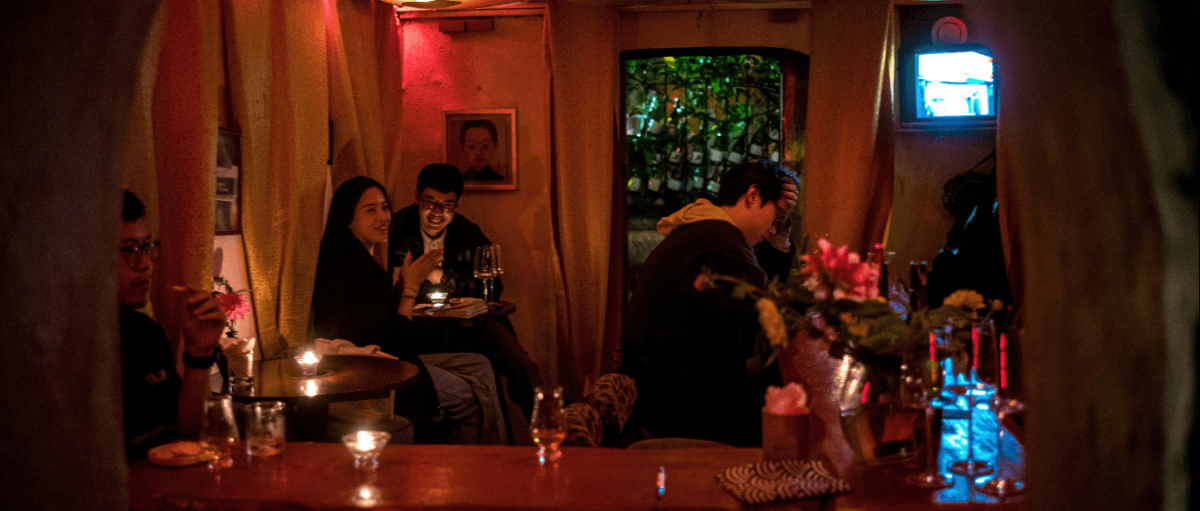
Hanoi was disappearing under the rain when I went looking for WONG.
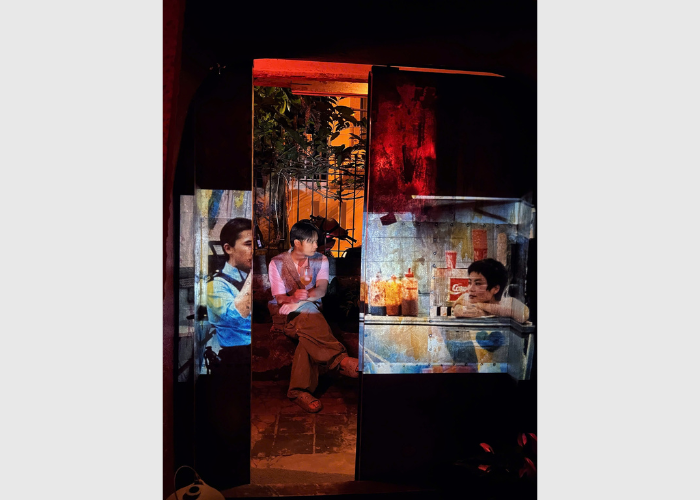
It was pouring cats and dogs, and by the time I found the tiny entrance, my feet were completely wet. On the door, a Wong Kar-wai film was playing. The Hong Kong filmmaker, best known internationally for In the Mood for Love, is almost synonymous with nostalgia, suspended time, and a particular Asian melancholy.
Inside WONG, those references are not decoration. They are the experience.
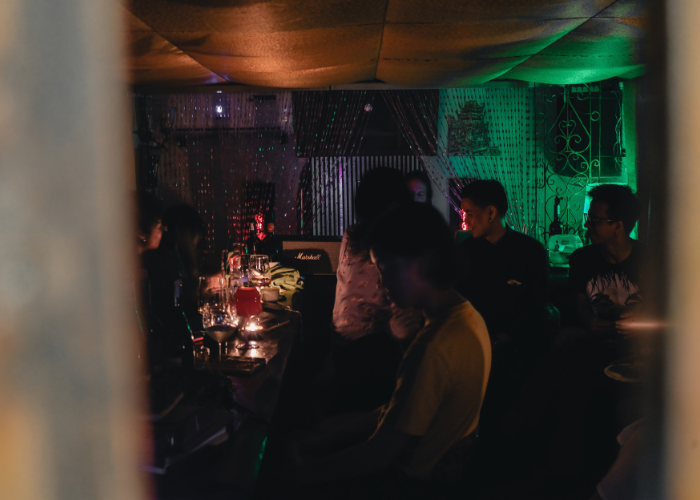
There is no kitchen, no food, and no elaborate tasting ritual. Just wine, cinema, music and conversation.
Duy was behind the bar that evening. Over a glass of Miklus from Collio, a savory, skin-contact Sauvignon Blanc, we talked about wine and about WONG. Outside, Hanoi was wet and noisy. Inside, time seemed to slow down.
But WONG is interesting for more than its atmosphere. It offers a small but revealing window into a wine market that is still developing—and into the opportunities and challenges facing those trying to build it.
Vietnam does not have a centuries-old wine culture comparable to France or Italy. Traditionally, drinking has been more closely associated with tea,coffee, beer and rice wine.
Modern wine culture developed partly through French influence, while serious domestic grape-wine production emerged much later, particularly around Đà Lạt and the central highlands.
That history remains visible in Hanoi.
Compared with Ho Chi Minh City, Hanoi feels more classical and traditional in its relationship with wine. During my visit, I encountered a mixture of locals, expatriates and tourists, but French influence remained particularly visible in the way wine is perceived and discussed.
French wines continue to be an important reference point. Languedoc, for example, is a French wine region rather than simply a synonym for French red wine, but names such as this can still carry strong recognition for drinkers who associate France with traditional wine culture.
Italy, meanwhile, is gaining credibility.
There is a practical reason. Italian reds can work naturally alongside Vietnamese food: acidity, savoriness, spice, moderate tannins and generous fruit can make them relatively intuitive partners for local flavors.
This suggests a market beginning to move beyond wine as a symbol of origin or status and towards wine as something to be chosen for taste, food and occasion.
Vietnam’s wine market remains young, but the consumer base is becoming more diverse. Wine Australia’s 2026 consumer research found Vietnamese wine drinkers concentrated among more affluent working professionals in larger cities such as Hanoi and Ho Chi Minh City, with red wine still an important category and consumers showing openness to different styles.
At the same time, Vietnam’s restaurant scene has become increasingly sophisticated.
The arrival and expansion of the Michelin Guide has given restaurants and hospitality professionals another platform for developing food-and-wine experiences. Wine therefore has more opportunities to be encountered through dining, service and curation rather than simply as a premium product.
But my experience in Hanoi also revealed another side of the market.
Duy could communicate comfortably about wine in English and had clearly developed a personal relationship with the category. In several other wine bars I visited, however, communication about wine was much more limited, and I encountered staff who appeared relatively unfamiliar with wine beyond its role as a beverage to serve.
This is a personal observation, not a judgement of Vietnam’s hospitality sector as a whole. But it points towards an important market-development issue: consumer curiosity and professional wine knowledge are not necessarily growing at the same speed.
Vietnam has an increasingly curious audience, but it also needs more people who can translate that curiosity into wine knowledge, hospitality and sales.
For anyone looking at Vietnam as an export market, the opportunity comes with complexity.
Wine is classified under specific HS codes, and the applicable tariff depends on the product, origin, and whether preferential treatment under a free-trade agreement applies. Vietnam’s official trade portal provides tariff information by HS code and distinguishes between MFN and preferential FTA rates.
The EVFTA is particularly relevant to European producers. Vietnam committed to eliminate import duties on wine and spirits from the EU over a seven-year schedule, subject to the agreement’s requirements. For an importer, therefore, country of origin and the documentation supporting preferential treatment can have a direct commercial impact.
But duty is only one part of the equation.
Importers also have to navigate customs procedures, product documentation, labeling and regulatory requirements, followed by distribution and storage. Vietnam’s official Trade Information Portal is structured around precisely these requirements, including HS classification, procedures, forms and standards.
For wine, logistics matter particularly. A market with a warm, humid climate and a growing premium segment needs importers and distributors who understand how to move and store wine appropriately.
The result is a market where choosing the right portfolio is only the beginning. The importer also needs the infrastructure and people capable of supporting it.
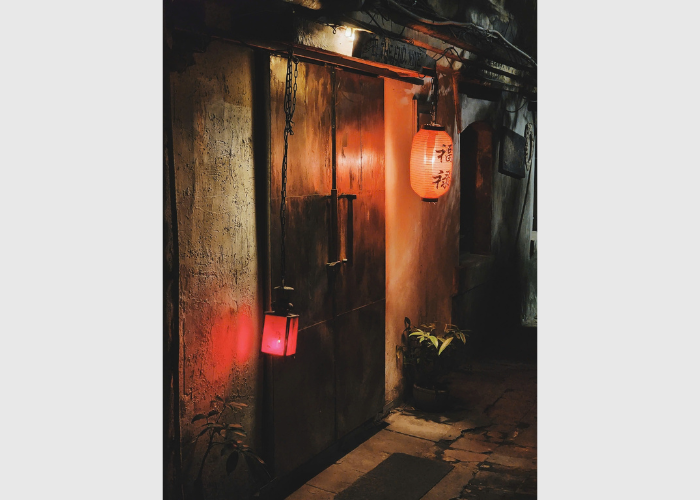
WONG opened in November 2022, founded by Vietnamese-American writer Nguyễn Quí Đức and Frenchman Pierre Rodeau.
Their idea was deliberately intimate: a space combining good wine with the atmosphere of 1980s and 1990s Asia and the cinema of Wong Kar-wai.
After Đức’s death and Rodeau’s move to Seoul, Oanh, who had been with the bar from the beginning, continued developing the project, later joined by Duy.
The philosophy is straightforward: “Life is short, drink good wine.”
The wines need character, complexity, and length, and they need to work without food because WONG has no kitchen. At the same time, the team actively searches for bottles that offer value rather than simply carrying a prestigious name.
Its seasonal menu is described as an “ode to Vietnamese seasons.”
But seasonality at WONG is also about the drinker.
Solo guests often choose longer-finishing wines, frequently reds. Friends catching up tend towards whites. Fuller reds become more attractive in cooler weather. Natural wines attract particular interest among Western guests, while Vietnamese drinkers often remain more comfortable with established French and Italian names.
The important point is that the bar is not simply following international trends. It is observing how its customers actually drink.
Duy himself was once a customer who was not particularly familiar with wine. Today, he enjoys discovering new producers and seasonal bottles and sharing those discoveries with guests.
That journey is significant.
Vietnam does not simply need more imported wine. It needs more people who know how to introduce it.
The opportunity in Vietnam therefore sits between curiosity and infrastructure.
There is a young, increasingly international consumer base. There are more restaurants, wine bars and hospitality experiences. There is greater exposure to different wine styles, while French wines continue to carry historical recognition and Italian wines are finding their own place alongside Vietnamese cuisine.
There is also a growing interest in wines that offer something beyond conventional prestige—natural wines, alternative styles and bottles with a story.
But the market still has to build the professional ecosystem around that demand: importers, distributors, educators, sommeliers and hospitality teams who can communicate wine without making it intimidating.
WONG’s answer is small, intimate and distinctly Hanoi.
Every night, a Wong Kar-wai film plays across the entrance door. People arrive alone or with friends. Wine is discussed without becoming a lecture. The bar does not appear interested in chasing every trend.
Instead, it creates a setting in which wine can become a social experience rather than a status symbol.
When I eventually stepped back into the Hanoi rain, my feet were still wet. The city had not changed. But something in me had.
For a few hours, there had simply been wine, conversation, cinema and a little mystery.
And perhaps that is where Vietnam’s wine opportunity really lies: not simply in selling more bottles, but in giving an increasingly curious generation more reasons to open them.
Written by Manuela Lo Conte DIPWSET
Also Read:
Selling Wine in Vietnam: A Fast-Growing Market Shaped by Urban Consumers and Premiumisation
Wining and Dining Through Ho Chi Minh City
Get your wines evaluated by leading Asian importers, distributors, retailers and trade buyers. Receive detailed feedback on quality, value and packaging and discover how your brand can improve its market potential in Asia.