
Submission
Deadline
October 16, 2026
Judging
Date
November 11, 2026
Winners
Announcement
November 26, 2026
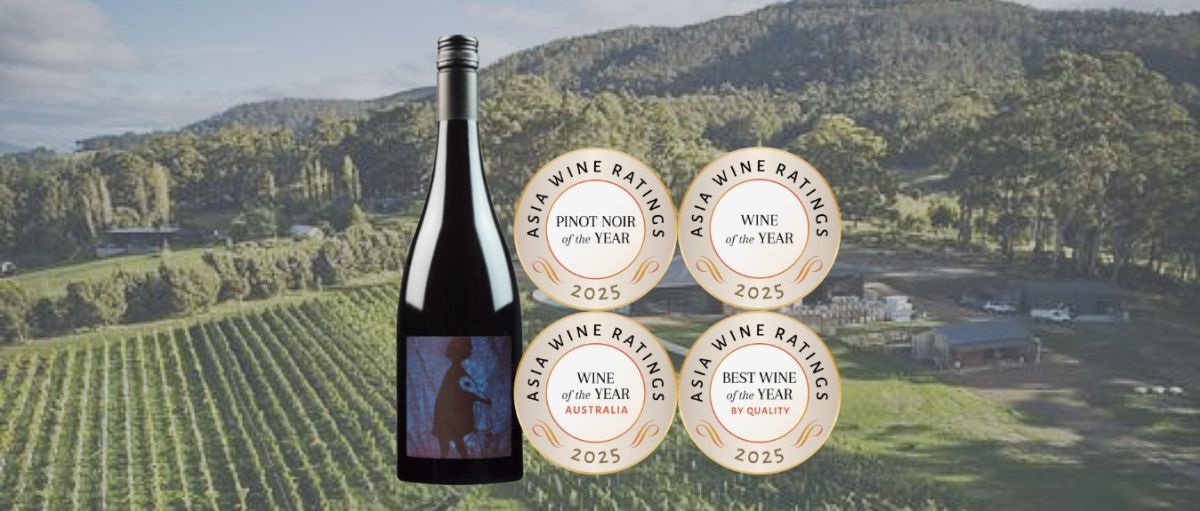
Southern Tasmania’s Mewstone Wines has emerged as one of Australia’s most compelling cool-climate producers, and 2025 has marked a defining milestone for the brand. Their 2024 Mewstone Pinot Noir swept the Asia Wine Ratings, winning Wine of the Year, Best Wine by Quality, Wine of the Year Australia, and Pinot Noir of the Year; an extraordinary achievement for a small, family-run vineyard located in the quiet coastal settlement of Flowerpot. Founded in 2011 by brothers Matthew and Jonny Hughes, Mewstone has built its reputation around meticulous viticulture, a commitment to minimal intervention, and an unwavering focus on site expression. In this interview, Proprietor Matthew Hughes discusses the meaning of the win, the winery’s evolution, the discipline behind their style, and how Mewstone is approaching its next phase of growth across Asia and beyond.
Edited excerpts from the interview.
It’s a really nice acknowledgement for our small team. We work in a quiet corner of Tasmania and just try to make the best wine we can from our site, so having the Pinot Noir recognised in this way is appreciated. It reflects the work we’ve put into the vineyard over the years and reinforces that our focus on detail and restraint is heading in the right direction.
Our goal is always site first. We don’t chase a particular market style. The Flowerpot vineyard has a very identifiable character—perfume, line, tension—and our job is simply not to get in the way.
For us, minimal intervention means doing the work in the vineyard so we don’t have to “fix” anything in the winery. Clean fruit, balanced canopies, appropriate crop load. That’s where the intervention really is. In the winery, we rely on natural ferments, minimal movements and we avoid fining or filtration unless absolutely required. The evolution has been in learning when to step back and when to step in. Early on we pushed out the boundaries of the no-intervention idea and found the balance. Now we support the wine when it needs it, but let each express its own voice.
You learn to embrace variation rather than fear it. Tasmania gives you a long runway, which means flavour develops before sugars spike. But you need to stay nimble with picking decisions, canopy work and disease pressure. Consistency comes from the underlying site—the soils, the exposure, the air flow—and from being disciplined year to year. The goal isn’t to make identical wines; it’s to make wines that feel true to the place regardless of the season.
The advantages are significant: greater texture, deeper complexity, and an overall sense of honesty in the final wine. Wild ferments introduce layers of nuance and character that simply cannot be replicated with commercial yeasts. They allow the vineyard’s natural microbiology to speak, adding individuality and detail. Similarly, avoiding fining and filtration helps preserve the wine’s natural mouthfeel, weight, and aromatic precision, ensuring nothing is stripped away in the pursuit of polish.
But this approach comes with very real risks. Without the safety net of additives or corrective processes, things can go wrong quickly if you’re not fully engaged. Temperature must be carefully controlled, hygiene standards must be uncompromising, and oxygen needs to be managed with precision. Most importantly, the team must taste constantly and act decisively. Minimal intervention only works when maximum attention stands behind it.
Planting the vineyard ourselves was the foundation. Committing early to Pinot Noir was another. Bringing in fruit from other regions under the hughes & hughes label gave us freedom to experiment, learn and grow sustainably without compromising the estate wines. Opening our own winery was also pivotal. Having full control from vineyard to bottle sharpened everything we do. And we’ve been fortunate to build a small team who believe in the same long-term vision.
We already work with several partners in Asia, and the goal now is to build on those relationships and add a few more that make sense long-term. We’re not looking for rapid expansion, just steady connections with people who understand our style and want to grow with us. The potential direct flights from Hobart to Singapore and Hong Kong would be a huge help. They’d make it much easier for us to spend proper time in the market and, just as importantly, for our partners and their customers to visit us here. That sort of access supports the slow, sustainable approach we’re aiming for.
To be honest, our focus is to keep doing what we do well rather than creating market-specific styles or releases. We’ve found that Asian customers respond to the wines because of their detail, balance and sense of place, so we’d rather stay true to that.
Tasmania still feels like it’s only just starting to show what it’s capable of. The shift toward precision viticulture, sustainability, better clonal material and small-batch winemaking is accelerating. For Mewstone, the excitement comes from our vineyard maturing. Older vines, refined farming, and the grafting work we’re doing now will shape the next decade of our wines. The quality potential is only increasing.
That the wines feel honest and unforced. A clear expression of a small patch of land on the D’Entrecasteaux Channel, made with care and restraint. If people recognise that sense of place in the glass, we’ve done our job.
Header image sourced from Mewstone Wines (Website).
Get your wines evaluated by leading Asian importers, distributors, retailers and trade buyers. Receive detailed feedback on quality, value and packaging and discover how your brand can improve its market potential in Asia.